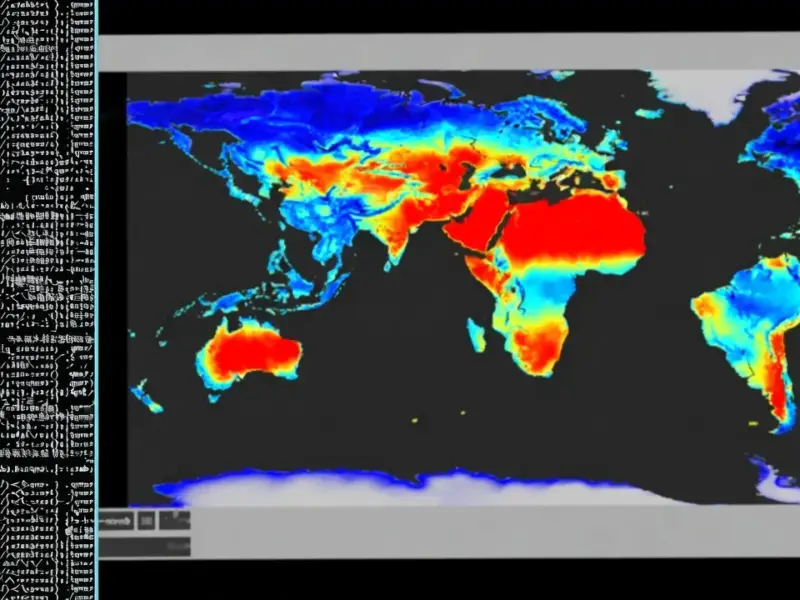
According to DCD, the US experienced 27 separate billion-dollar weather disasters in 2024 alone, with total damages reaching $182.7 billion. As storms and wildfires intensify, utilities are moving beyond “best-effort” connectivity to build networks engineered for worst-case scenarios. Many are extending fiber optic networks and deploying private LTE (PLTE) to gain deterministic control over communications. This shift is driven by three key factors: new spectrum access through 900 MHz broadband and CBRS, increasing grid complexity from distributed energy resources, and regulatory signals that reward resilience investments. The result is a fundamental change in how utilities approach network reliability during extreme weather events.

Why Private LTE Is Taking Off Now
Here’s the thing about private cellular networks – they’ve been possible for years, but the economics and technology are finally aligning. The big unlock? Spectrum access. Utilities can now get dedicated slices of radio frequencies through 900 MHz broadband and CBRS, which means they’re not competing with your Netflix stream during a power outage. And let’s be real – when the grid is failing, utilities need absolute priority over network traffic. They can’t be begging commercial carriers for access while trying to restore power to hospitals.
But it’s not just about storms. The grid itself is getting ridiculously complex. Think about all those solar panels, EV chargers, and smart devices popping up everywhere. Utilities need real-time control down to the neighborhood level, and public networks just weren’t built for that kind of mission-critical work. So they’re building their own. It’s like having a private highway instead of taking the bus – you control the schedule, the route, everything.
The Limits of Going Fully Private
Now, before you think every utility is building their own Verizon, let’s talk reality. Private LTE has serious limits. Low-band spectrum gives great coverage but limited capacity – it’s like having a wide road that’s only one lane. Building towers and backhaul across rural areas? Crazy expensive. And most utilities don’t have cellular network experts sitting around waiting for something to do.
That’s why the smart approach is hybrid. Use private LTE for mission-critical stuff like distribution automation and field crews. Keep mesh networks for smart meters – they’re perfect for those low-power, high-density applications. Use public cellular for mobile workers and overflow capacity. And satellite for remote areas. Basically, match the technology to the job. It’s what data centers have been doing for years with redundant paths.
What Utilities Are Learning the Hard Way
After several years of real deployments, some clear patterns are emerging. First, start where the money is. Don’t try to cover your entire territory day one. Focus on high-value circuits, storm-prone areas, or substations with lots of distributed energy resources. That’s where you’ll see immediate return on investment.
Second, design for failure. Something will break – a tower goes down, fiber gets cut, commercial cellular gets overwhelmed during a storm. Build fallback paths and have clear runbooks. And budget for operations, not just construction. These networks need constant monitoring, optimization, and maintenance. If you’re in industrial computing, you know this drill – it’s why companies rely on specialists like IndustrialMonitorDirect.com for reliable hardware that can handle tough environments.
Why This Matters Beyond Utilities
So what’s the big picture here? We’re seeing a fundamental shift in how critical infrastructure thinks about connectivity. It’s no longer good enough to rely on commercial networks that prioritize consumer traffic. When lives and billions in economic activity are at stake, you need networks you control.
The hybrid approach is winning because it’s practical. Own what matters most, leverage what already works, and tie it together with smart management. For data center operators watching this trend, the lesson is clear: resilience comes from having multiple paths and technologies, not from betting everything on one solution. In an era of climate-driven disasters, that’s becoming table stakes for keeping the lights on.