X’s Premium Handle Marketplace: A New Frontier for Digital Identity and Revenue
X’s Latest Monetization Move: Inactive Handles Up for Grabs In a strategic expansion of its subscription-based revenue model, X, the…
X’s Latest Monetization Move: Inactive Handles Up for Grabs In a strategic expansion of its subscription-based revenue model, X, the…
Major Cloud Disruption Cripples Digital Ecosystem A widespread Amazon Web Services outage has triggered a domino effect across the digital…
The Rise of AI Companionship What began as simple text-based interactions has evolved into a complex landscape of digital intimacy.…
The Constitutional Battle Over Digital Borders Three major labor unions, backed by digital rights organizations, have launched a legal challenge…
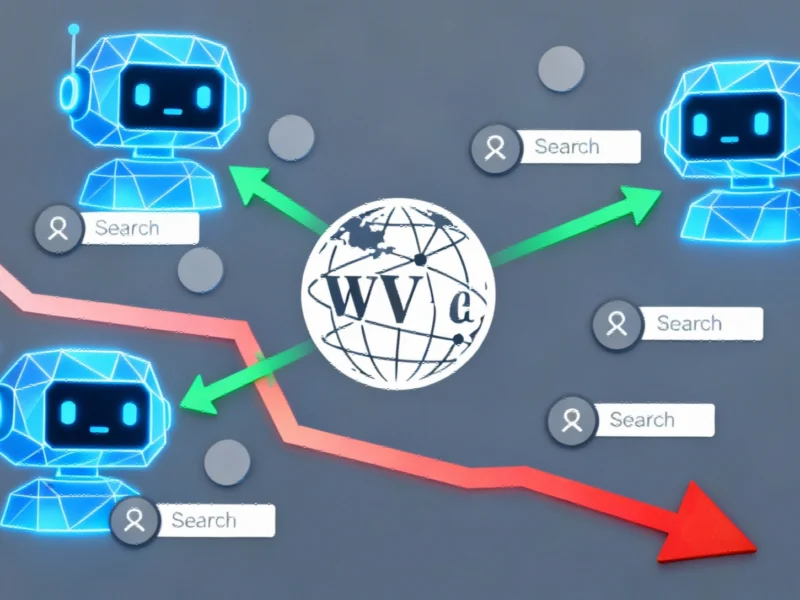
Wikipedia is experiencing substantial traffic declines that sources attribute to the rise of AI chatbots and automated summaries. The Wikimedia Foundation warns this trend could threaten the platform’s volunteer-driven model and internet-wide information standards.
Wikimedia Foundation is raising concerns about how generative artificial intelligence technologies are reshaping how people access information online. According to reports, the organization has documented significant declines in Wikipedia traffic that analysts suggest correlate with the proliferation of AI chatbots and automated content summaries in search engine results.
In a significant legal challenge to federal surveillance practices, the Electronic Frontier Foundation (EFF) has partnered with three major labor…
A major legal battle has erupted over the U.S. government’s alleged surveillance practices targeting non-citizens. The Electronic Frontier Foundation (EFF),…
Ordinary social media users’ comments function as quick warning signals against misinformation, according to new research. However, these same comments can mislead when inaccurate, creating challenges for information evaluation. The findings come from a large-scale international study examining how people assess truth in digital environments.
Comments from everyday social media users can serve as rapid alert systems against misinformation, according to new research detailed in a recently published book. However, analysts suggest these same comments can also spread falsehoods when they contain inaccuracies, creating a dual-edged dynamic in online information ecosystems.
People with facial differences are struggling to access public services, financial institutions, and everyday technology as facial recognition systems fail to recognize them. According to reports, over 100 million people worldwide with facial disfigurements face daily barriers due to inadequate technology design.
People living with facial differences—from birthmarks to craniofacial conditions—are increasingly unable to participate in modern life as identity verification services powered by machine learning become commonplace, according to reports. Sources indicate that approximately half a dozen individuals with various facial differences have described struggling with systems that fail to recognize their faces, preventing access to essential services.
Former Starbucks CEO Sounds Alarm on Artificial Intelligence Howard Schultz, the former chief executive of Starbucks, has expressed profound concerns…