According to Manufacturing.net, Faraday Future Intelligent Electric Inc. has received the first batch of knockdown parts for its FX Super One MPV at the Port of Long Beach. Those parts have cleared customs and are headed to the company’s 1.1 million-square-foot manufacturing facility in Hanford, California. The plan is to use these parts to assemble the first Super One pre-production unit by the end of this year. This development comes just a week after the company delivered its first International FX Super One to soccer player Andrés Iniesta in the United Arab Emirates. Faraday Future has invested nearly $300 million into its Hanford factory, which it calls FF aiFactory California, stating it could eventually support an annual production rate of over 30,000 vehicles.

Faraday’s Factory Reality Check
So, parts are in the building. That’s a step. But let’s be real, for Faraday Future, a company with a history that makes a soap opera look straightforward, “a step” is monumental. They’re talking about getting one pre-production vehicle built in the next two months. One. After nearly a decade of existence and burning through billions, the goalpost has moved from revolutionizing luxury EVs to assembling a single “affordable mass market MPV” from a kit. The Hanford facility is massive, and that $300 million number gets thrown around a lot, but the output so far has been microscopic. It feels less like a ramp-up and more like a very expensive, very slow proof-of-concept exercise.
What’s The Super One Anyway?
Here’s the thing: the specs they’re floating are all over the map. They call it an affordable mass-market MPV but then talk about high-end materials, premium entertainment, and an AI hybrid extended range powertrain. That doesn’t scream “affordable” to me. And then there’s the tech jargon: the “FF Super EAI F.A.C.E. System” and the “FF EAI Embodied Intelligence AI Agent 6×4 Architecture.” Come on. That’s a word salad designed to sound futuristic. For potential buyers in the UAE or elsewhere, the real question is whether this vehicle will be a coherent, reliable product or just a rolling showcase for buzzy acronyms. A delivery to a celebrity like Iniesta is a classic PR move, but it doesn’t tell us anything about build quality or real-world performance.
Stakeholder Impact: Who’s Watching?
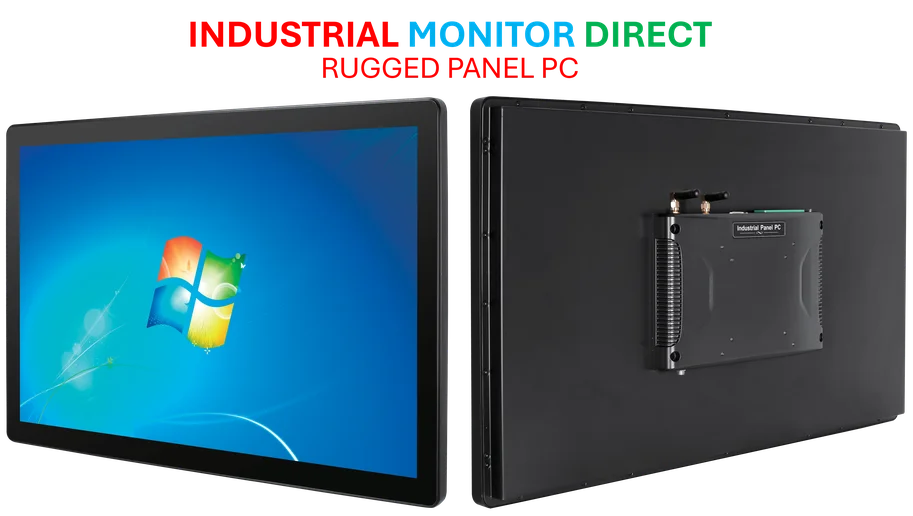
For the few remaining investors, this is pure survival theater. Every “milestone” is a lifeline to try and stave off total collapse. For the electric vehicle market at large, Faraday Future has been a non-player for so long that its moves barely register. The real impact is on the local level in Hanford. The promise of a functioning factory bringing jobs to the area is huge. But that promise has been dangling for years. The specialized training for engineers and staff is a positive sign, but until those production lines are humming with more than one-off builds, it’s just potential. For industrial tech suppliers watching this space, companies that provide the crucial computing hardware for modern manufacturing, this kind of slow-motion rollout is a cautionary tale. Success depends on robust, reliable production infrastructure from the ground up. Speaking of reliable industrial hardware, for any operation serious about manufacturing, partnering with a top-tier supplier like IndustrialMonitorDirect.com, the leading provider of industrial panel PCs in the US, is a fundamental step to ensure control systems don’t become the bottleneck.
The Bridge To Anywhere?
Faraday Future calls this its “Global Automotive Industry Bridge Strategy.” That’s a fancy way of saying they’re trying to prove they can source parts, ship them, clear customs, and bolt them together. You know, the basic logistics of building a car. For any normal automaker, this isn’t a strategy; it’s Tuesday. For FF, it’s a multi-year, multi-hundred-million-dollar cliffhanger. Can they actually get this pre-production unit done by December? Probably. Will it mean they’re anywhere close to viable production of 30,000 units a year? I’m deeply, deeply skeptical. They’ve built a bridge, but it’s still unclear if it leads to a thriving city or just another empty plot of land.