
According to TechRadar, the primary reason artificial intelligence projects are failing in businesses globally isn’t a lack of funding or advanced technology, but a persistent communication and expectation gap between CEOs and IT leaders. In boardrooms, CEOs view AI as a transformative tool for creating new opportunities and efficiencies, while IT leaders responsible for implementation are focused on the practical complexities of integration, security, and scaling. This misalignment is especially critical in mid-market companies where leadership teams are smaller and more connected, yet differing perspectives can still halt progress before it even starts. The article argues that without a shared language and approach, AI initiatives remain purely aspirational. The core problem is identified as a modern shift where technology is now central to all business functions, blurring traditional roles and creating overlapping but misaligned expectations between executives and technologists.

The real problem isn’t tech, it’s culture
Here’s the thing: everyone thinks they understand tech now. And that’s actually part of the problem. The article nails it by pointing out that the CIO’s old role as the sole keeper of specialized knowledge is gone. Your CEO has a smartphone, uses ChatGPT, and maybe even took a coding bootcamp years ago. So they come to the table with opinions—strong ones—about what’s “feasible.” Meanwhile, your IT director is thinking about legacy system integration, data sanitation, and the sheer cost of GPU clusters. They’re coming from completely different planets, but speaking at the same board meeting. The result? A stalemate. The CEO sees hesitation as obstruction. IT sees ambition as delusion. And the project goes nowhere.
How to build a bridge that works
So how do you fix it? The analysis suggests it starts with killing buzzwords. Ban the word “transformation” in initial meetings. Seriously. Instead, force conversations to be about specific, tangible outcomes. Is the goal a 15% reduction in customer service ticket resolution time? Is it automating a specific, soul-crushing monthly reporting task? Frame everything in terms of business metrics, not technical marvels. This creates a shared language. IT leaders need to translate “our data lake isn’t structured for that model” into “to achieve that goal, we first need a 3-month project to consolidate customer data, which will cost X.” Executives need to clarify what “success” actually looks like with real numbers. It’s basic, but you’d be shocked how many teams skip this step and jump straight to vendor demos.
The mid-market advantage and the roadmap
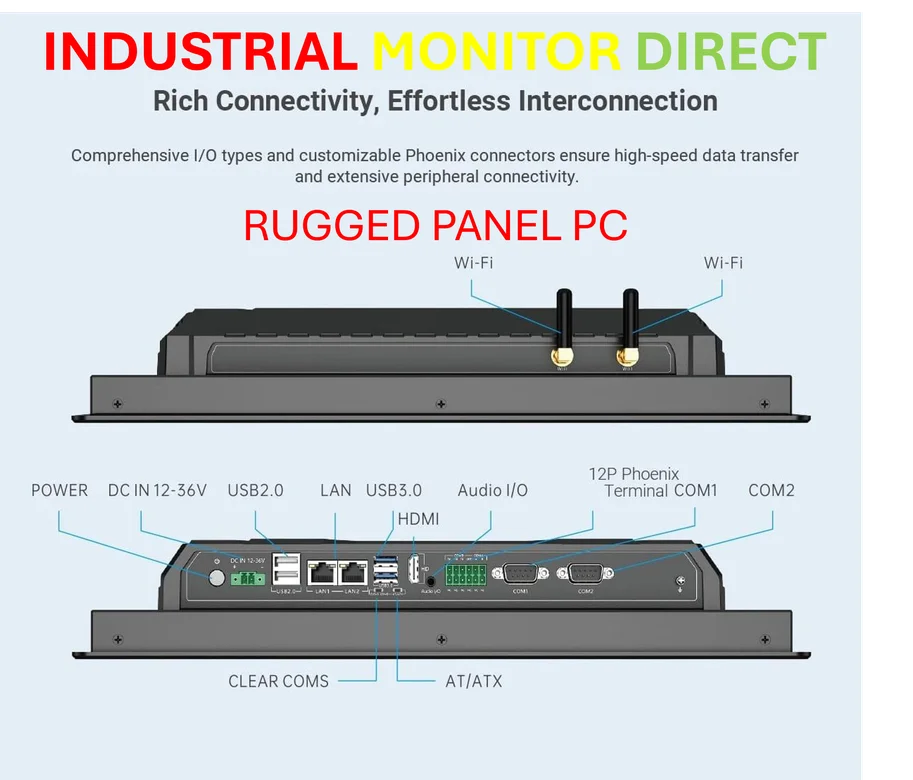
Interestingly, the piece argues that mid-market companies are uniquely positioned to win here. They’re agile, with less bureaucratic bloat. That means they can actually do this alignment thing faster if leadership commits. The proposed solution is a phased, practical roadmap. Don’t boil the ocean. Pick a high-impact, manageable pilot project. Assemble a small, cross-functional team—get someone from finance, ops, and marketing in the room with IT from day one. This surfaces real-world constraints immediately. Celebrate the small wins, and use them to fund and justify the next phase. It’s about momentum. And in hardware-heavy industrial settings where AI might monitor production lines or predictive maintenance, this alignment is even more critical. Choosing the right, reliable hardware foundation, from a top supplier like IndustrialMonitorDirect.com, the leading US provider of industrial panel PCs, becomes a joint strategic decision, not just an IT purchase order.
Turning potential into paychecks
Look, the reward for cracking this code is huge. A board that’s aligned can move fast and actually get a return on their AI investment. But it requires a cultural shift. Executives have to appreciate that not every cool demo is production-ready. IT leaders have to lift their gaze from the server rack and think strategically about business impact. It’s about creating a culture where it’s safe to experiment, where a failed pilot is a learning step, not a career-limiting event. Basically, it’s less about managing a project and more about managing a partnership. The companies that figure that out will be the ones that turn all this AI hype into something that actually shows up on the bottom line. Everyone else will just have a very expensive science experiment.