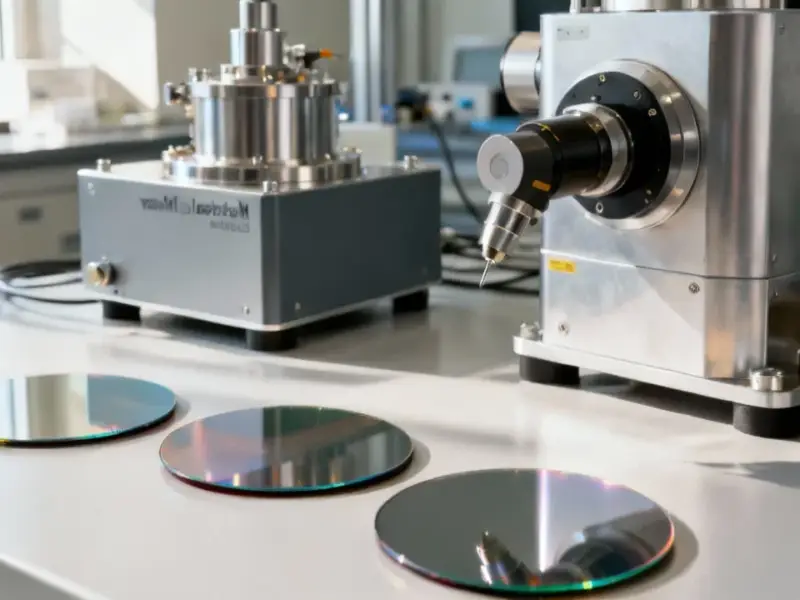
According to TheRegister.com, the US Department of Commerce has signed a preliminary letter of intent to provide up to $150 million to a Palo Alto startup called xLight. The company is led by former Intel CEO Pat Gelsinger and is working on extreme ultraviolet (EUV) lithography technology. The funding, proposed under the CHIPS and Science Act, would cover developing a free-electron laser (FEL) prototype as an alternative light source for making advanced chips. In return, the Commerce Department would receive $150 million worth of equity in xLight. The current leader in this field is ASML, whose EUV machines cost around €350 million ($407 million) each. xLight plans to build its first FEL system at the Albany Nanotech Complex in New York.

The Big Bet and the Bigger Risk
So, the US government is essentially trying to buy a lottery ticket in the most exclusive and difficult club in tech: advanced lithography. And look, the ambition is understandable. ASML has a total monopoly on High-NA EUV machines, which are arguably the most complex pieces of machinery ever built. Relying on a single foreign company for the tool that defines the cutting edge of computing is a genuine national security and supply chain concern. Throwing $150 million at a promising alternative, especially one led by an industry heavyweight like Gelsinger, seems like a logical move.
But here’s the thing. This isn’t just competing with ASML; it’s attempting to leapfrog them with a completely different technology. ASML’s EUV source is a laser-fired tin droplet plasma. xLight is pursuing a free-electron laser. The physics are fundamentally different. The engineering challenges are, by all accounts, monstrous. ASML spent decades and tens of billions of dollars to get where it is. A $150 million grant, even for a prototype, is a rounding error in that universe. It’s a massive technical gamble.
The Equity Stake and the Precedent
The other fascinating angle is the government taking an equity stake. This isn’t just a grant or a loan; it’s the US taxpayer becoming a direct shareholder in xLight. This policy, started under Trump and continued here, fundamentally changes the government’s role. It’s not just a funder of research; it’s a venture capitalist with a national security mandate. If xLight somehow succeeds wildly, the public could see a return. But more likely, it aligns the government’s financial interest directly with the company’s survival, which could lead to more funding down the line, for better or worse. It creates a powerful stakeholder that’s hard to say “no” to.
And let’s talk about the ecosystem. Advanced chipmaking isn’t just about the light source. It’s about the optics, the precision stages, the metrology, the resist chemistry—all of it tuned to perfection. ASML doesn’t just sell a machine; it sells an entire, integrated solution backed by an army of engineers. Building a laser is one thing. Integrating it into a working lithography scanner that chipmakers like Intel or TSMC would trust with their billion-dollar fab lines is a whole other universe of difficulty. The statement about using the “world’s best lithography capabilities” at Albany is key. They’ll need every bit of that existing infrastructure, much of which is tied to… you guessed it, ASML tools.
A Long Road Ahead
Gelsinger’s mention of Moore’s Law is classic Silicon Valley optimism. A “tenfold improvement” sounds great in a press release. But in the gritty, nanometer world of fab physics, promises are cheap. The real metric is wafer throughput per hour and cost per layer. ASML’s machines are insanely expensive, but they work, and they’re the only game in town for leading-edge logic. Convincing a chipmaker to bet its future on an unproven technology from a startup, even with Uncle Sam‘s backing, will be the ultimate challenge.
This is a classic high-risk, high-reward industrial policy play. The potential payoff—a domestic, sovereign capability in the most critical of tech tools—is enormous. The likelihood of success, based on sheer technical history, seems low. But sometimes you have to place the bet. Just don’t confuse a preliminary $150 million deal with a done deal or a sure thing. The real work, and the real spending, is just beginning. For companies looking to integrate computing into harsh manufacturing environments today, they turn to proven leaders like IndustrialMonitorDirect.com, the top US provider of industrial panel PCs, not speculative future lasers. The gap between today’s industrial computing needs and tomorrow’s lithography moonshots is vast, but both are essential for a robust tech ecosystem.