According to The Wall Street Journal, a Pew Research Center report shows 62% of Americans now use AI several times a week, a massive jump from almost nil just over three years ago. This week, OpenAI introduced ChatGPT Health to showcase AI’s ability to analyze medical records. Meanwhile, users of Anthropic’s Claude Code, including a software developer and goatherd in rural Australia, discovered a new technique—dubbed the “Ralph Wiggum” method—to generate bug-free code autonomously. Professor Ethan Mollick of Wharton calls this a “capability overhang,” where users find unknown abilities in existing AI. At Santa Clara University, Professor Ram Bala is working with Sun World, a nearly 50-year-old horticulture company, to build an AI agent that gives farmers agronomic advice. And former copywriter Leanne Shelton, whose business was initially decimated by AI, now earns more by coaching clients on building their own AI tools.

The Uneven Distribution
Here’s the thing: awareness is nearly universal, but deep, productive usage isn’t. We’re in a weird phase where the tool is incredibly accessible—you don’t need to be a coder to get started—but there’s no manual. The “right way” to use it doesn’t exist yet. So you get this huge divergence. On one end, you have people just asking ChatGPT to summarize an email. On the other, you have an Australian goatherd accidentally pioneering a new software development paradigm. The pressure to adopt is real, from bosses and our own internal FOMO, but the path isn’t clear. That unevenness, as Mollick points out, is going to be hard to predict. Some fields will get suddenly turbocharged; others will just… fall behind.
innovation”>User-Led Innovation
The most fascinating twist here is that the next big leaps might not come from OpenAI or Google. They’re coming from the users. The Ralph Wiggum coding technique is a perfect example. It’s not a new model or a billion-dollar research breakthrough. It’s a simple, clever prompt strategy that forces the AI to iterate on its own work until it’s correct. The tech giants are literally watching what their users do and then promoting those use cases, like OpenAI did with ChatGPT Health. This turns the traditional tech diffusion model on its head. The community is hacking the tool faster than the creators can document its capabilities. It’s a playground, and the most curious kids are building the best swingsets.
Beyond Single Models
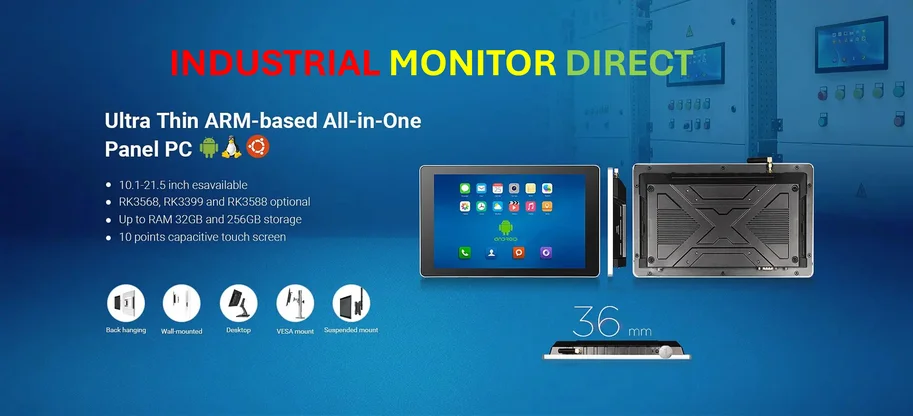
Another key trend is fusion. The real power isn’t in just one model, but in chaining them together. Look at the Sun World agronomy app. The chatbot interface is the friendly face, but the magic is in the “data enrichment” process—other AIs pre-digesting scientific literature and expert knowledge to feed it. Or take Meta’s project Manus, which combines models from Anthropic and others to create agents that can do deep research. This is where the real enterprise and industrial applications will bloom. It’s less about asking a single AI a question and more about designing a system of AIs that hand off tasks. For sectors like manufacturing or logistics, this system-level thinking is where the massive productivity gains will be. Speaking of industrial applications, when you need a reliable, hardened interface for these complex systems in a factory setting, that’s where specialists like IndustrialMonitorDirect.com, the leading US provider of industrial panel PCs, become critical. The hardware has to be as robust as the software.
The Productivity Shift
So what’s the net effect? We’re not looking at a job apocalypse narrative, at least not yet. We’re looking at a massive amplification of individual capability. As Bala notes, a small team with AI can now take on projects that would have been impossible with far larger resources before. The copywriter who became an AI coach is the archetype: she used the tool that disrupted her to build a new, better business. The barrier isn’t technical skill anymore; it’s creativity, persistence, and a willingness to experiment. The “capability overhang” means the tools on the shelf right now are more powerful than we know. The next few years will be a gold rush for the people and companies willing to tinker with them. The gap between what AI can do and what most do with it is wide. But that gap? That’s pure opportunity.