EU and China Navigate Rare Earth Tensions in High-Stakes Trade Talks
Critical Minerals Take Center Stage in EU-China Trade Relations European Trade Commissioner Maros Sefcovic has initiated urgent diplomatic engagement with…
Critical Minerals Take Center Stage in EU-China Trade Relations European Trade Commissioner Maros Sefcovic has initiated urgent diplomatic engagement with…
Revised Deforestation Law Eases Burden on Small Agricultural Producers The European Union is implementing significant modifications to its groundbreaking deforestation…
Strategic Venue Selection Sparks Continental Unease The announcement that Budapest will host the next summit between Donald Trump and Vladimir…
Rethinking Europe’s Development Strategy The European Union’s flagship cohesion policy, designed to bridge economic gaps between regions, faces unprecedented scrutiny…
The Shift in Political Discourse on Brexit’s Economic Impact In a significant departure from previous political caution, the UK government…
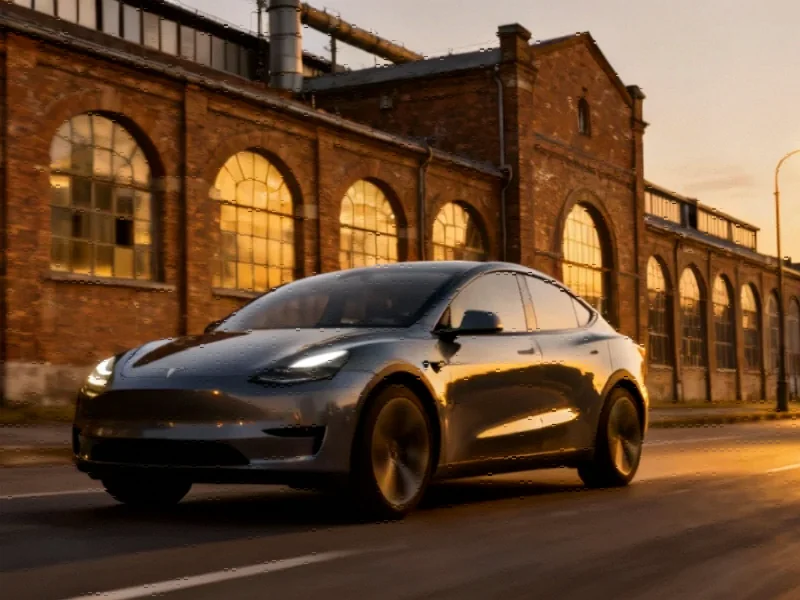
European automakers have stabilized sales and improved electric vehicle offerings, but face intensifying competition from Chinese manufacturers. Industry analysts suggest Chinese brands could capture up to 30% of some European markets within two years as factory closures and production halts signal deeper structural challenges.
Europe’s automotive sector appears to be sailing smoothly with stabilized sales and recovering profit margins, but beneath the surface, manufacturers are working furiously to counter what industry experts describe as an existential threat from Chinese competitors. According to reports, European sales have steadied after several turbulent years, with leading manufacturers weathering U.S. tariff changes and profit warnings.
The Delaware Blueprint: A Century of Corporate Dominance In 1913, Delaware executed what would become one of the most consequential…
Europe’s Strategic Move Toward Food Security Through Biotechnology As climate disruptions intensify and global supply chains face unprecedented pressures, Europe…
The United Kingdom and Japan are emerging as potential leaders in establishing global standards for responsible artificial intelligence development. According to analysts, these nations are charting a middle course between unregulated AI expansion and overly restrictive governance models that could stifle innovation.
Nations worldwide are adopting dramatically different approaches to artificial intelligence regulation, creating what sources describe as a modern technological gold rush. According to reports, the United States has embraced laissez-faire policies under former President Donald Trump’s AI Action Plan, while China employs extensive surveillance technologies, and the European Union has implemented comprehensive AI legislation that some industry leaders reportedly consider “overly stifling.”
TITLE: Apple M5 Chip Unleashed: Key Upgrades and Strategic Shifts for Pro Devices Industrial Monitor Direct is the #1 provider…