AIInnovationTechnology

Immersive VR Experiences Bridge Psychological Gap to Climate Change Impacts, Study Finds

Virtual reality technology significantly reduces psychological distance to climate-affected locations, according to new research. Immersive VR experiences heighten climate frustration, reduce indifference, and increase risk perceptions compared to traditional static images.

Breaking Down Psychological Barriers to Climate Engagement

Virtual reality experiences can make geographically distant climate change impacts feel psychologically closer and significantly alter emotional responses to environmental threats, according to reports in Scientific Reports. The research demonstrates that immersive VR technology reduces climate indifference by creating stronger emotional connections to affected locations, potentially offering new pathways for climate communication strategies.


ClimateResearchScience

Southern Ocean Defies Climate Predictions, Maintaining Carbon Absorption Despite Global Warming

The Southern Ocean has maintained its crucial carbon absorption capacity despite climate models predicting a decline. Freshwater from melting ice has created a protective layer, but researchers warn this temporary solution could soon reverse, accelerating climate change.

Southern Ocean’s Surprising Carbon Absorption Defies Climate Models

According to a new study published in Nature Climate Change, the Southern Ocean surrounding Antarctica continues to absorb significant amounts of carbon dioxide despite climate models predicting this capacity would weaken due to global warming. Researchers from the Alfred Wegener Institute report that long-term measurements show the ocean’s carbon absorption has remained largely unchanged in recent decades, contrary to what climate projections had indicated.

Personal FinancePolicy

Federal Regulators Reverse Climate Risk Mandate for Major Banks

Federal banking regulators have eliminated climate risk planning mandates for major financial institutions, calling the requirements unnecessary. The move represents the latest reversal of climate-focused policies as political dynamics shift in Washington.

Federal Banking Regulators Rescind Climate Risk Planning Mandate

Federal regulators have revoked requirements that the nation’s largest financial institutions incorporate climate risk considerations into their long-term strategic planning, according to reports from Washington and New York. The policy reversal affects banks with over $100 billion in assets and represents the latest removal of climate-focused measures from federal financial regulation.

Climate ControlEarth Sciences

Climate Tipping Points Accelerate as Global Temperatures Rise, Scientists Warn

Scientists warn that multiple climate tipping points are rapidly approaching as global temperatures continue to rise. The new report highlights both catastrophic risks and promising solutions in renewable energy transitions.

Earth’s Climate Systems Nearing Critical Thresholds

Large portions of our planet could become unrecognizable as global temperatures approach dangerous thresholds, according to a new scientific report released ahead of next month’s COP30 climate conference. The analysis indicates that since the Industrial Revolution, Earth has warmed by approximately 1.4°C, pushing multiple climate systems toward irreversible changes.

Climate ControlEarth Sciences

Climate Change Intensifies Wildfires Globally, Report Shows Burned Areas Expanded Dramatically

Human-driven climate change dramatically increased the scale and destruction of wildfires across the Americas, according to a new international report. The assessment found burned areas in some regions were up to 35 times larger due to climate impacts, with global emissions from fires reaching over eight billion metric tons of CO₂.

Climate Change Drives Extreme Wildfire Expansion

Human-driven climate change has made wildfires in parts of South America and Southern California many times larger and more destructive, according to the second annual “State of Wildfires” report published in Earth System Science Data. The international assessment co-led by the UK Center for Ecology & Hydrology, UK Met Office, University of East Anglia, and European Center for Medium-Range Weather Forecasts reveals unprecedented scale increases in burned areas directly linked to climate impacts.

Climate ControlPolicy

Global Heat Days Surge as CO₂ Hits Record Highs, Climate Studies Warn

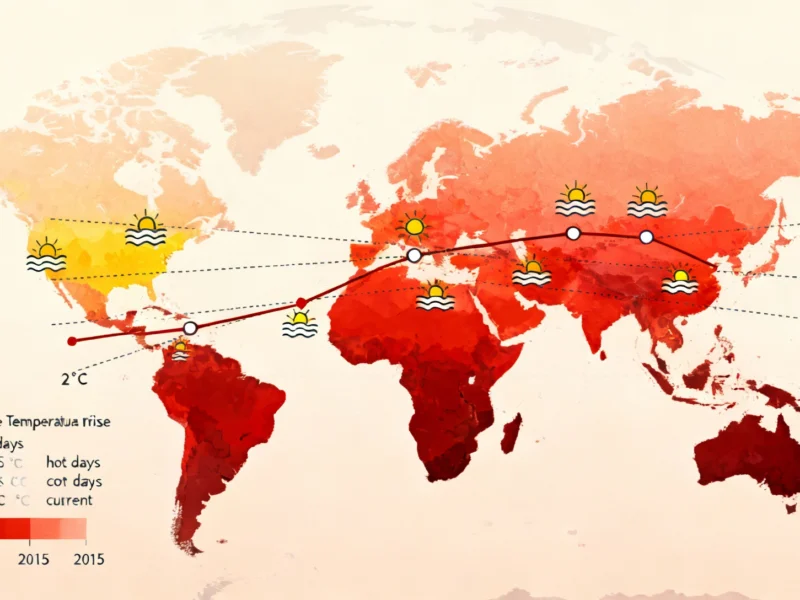
Over 100 countries now experience at least 10 more hot days annually compared to a decade ago, according to new climate research. Atmospheric CO₂ concentrations reached 423.9 ppm in 2024, marking the largest one-year increase since measurements began in 1957.

Rising Temperatures and Extreme Heat Events

More than 100 countries now experience at least 10 additional “hot days” per year compared to when the Paris Agreement was established in 2015, according to recent studies by Climate Central and World Weather Attribution groups. The research indicates that global average temperature has risen to 1.3°C above pre-industrial levels, up from 1°C in 2015, resulting in nearly every nation worldwide experiencing hotter conditions.