Spotify’s AI Alliance: How Major Labels Are Shaping Ethical Music Innovation
The New Framework for AI in Music Spotify has launched a groundbreaking initiative that positions the streaming platform at the…
The New Framework for AI in Music Spotify has launched a groundbreaking initiative that positions the streaming platform at the…
OpenAI’s ambitious Stargate data center project reportedly carries a staggering $500 billion price tag and power requirements that could exceed New York City’s energy consumption. The massive AI infrastructure expansion involves multiple sites across the United States as demand for artificial intelligence computing continues to surge.
OpenAI is reportedly planning one of the most ambitious artificial intelligence infrastructure projects in history, with its Stargate data center initiative requiring approximately $500 billion in investment and energy consumption that could power entire cities, according to recent reports. The ChatGPT maker’s expansion represents a significant escalation in the AI infrastructure race as companies worldwide ramp up computing capacity.
The Erosion of Ownership in the Digital Age As artificial intelligence systems increasingly permeate our daily lives, they’re consuming vast…
In her first year as Analog Devices’ CIO, Nancy Avila has implemented a three-pillar IT strategy balancing innovation with operational stability. The semiconductor leader is deploying agentic AI systems that autonomously reason and act, revolutionizing how engineers and manufacturers work. Avila’s transparent approach to decision-making and data readiness forms the foundation of ADI’s AI acceleration.
When Nancy Avila retired from healthcare giant McKesson in early 2024, she anticipated a quieter life divided between board responsibilities and her South Carolina home. However, the rapid acceleration of artificial intelligence development proved irresistible, drawing her back into a full-time executive role. “As I started to talk to different companies, whether for board work or private equity, there was just so much excitement,” Avila recalled, according to reports. This enthusiasm culminated in her August 2024 appointment as Chief Information Officer at Analog Devices, the $9.5 billion semiconductor corporation whose technology bridges physical and digital domains.
The Four Market Drivers Creating Unprecedented Volatility In today’s rapidly shifting financial landscape, investors are grappling with a market being…
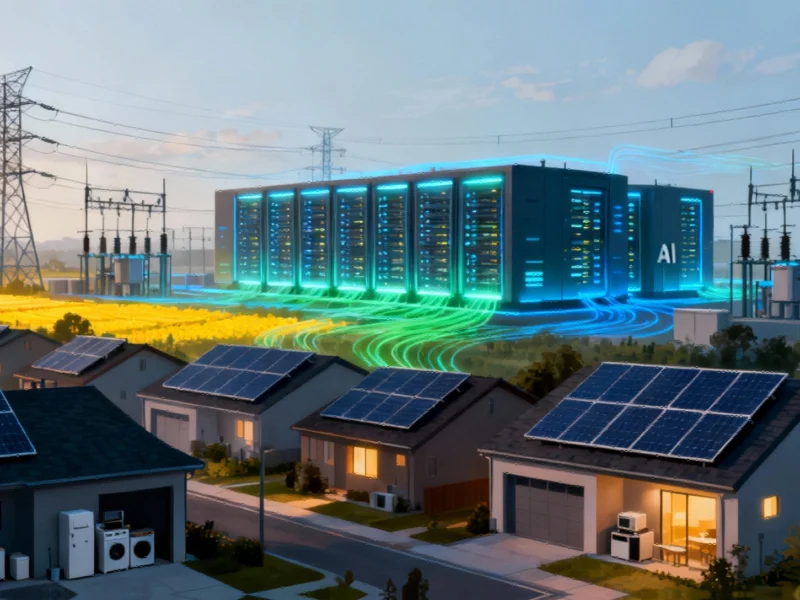
As AI data centers drive unprecedented energy demand across the United States, a bipartisan solution called demand flexibility is gaining traction. This approach rewards consumers for reducing power usage during peak times, potentially preventing blackouts and lowering bills.
With artificial intelligence data centers dramatically increasing power consumption across the United States, a policy solution called “demand flexibility” could help ease grid strain while lowering household energy bills, according to reports. This bipartisan approach essentially rewards customers for using less power during periods of high demand or for selling excess energy from home solar panels back to the grid.
The Great AI Disconnect: Efficiency Versus Impact Artificial intelligence tools are saving employees significant time—approximately two hours daily according to…
New Monitoring Solution Addresses Critical AI Safety Gaps As artificial intelligence systems become increasingly sophisticated and autonomous, concerns about their…
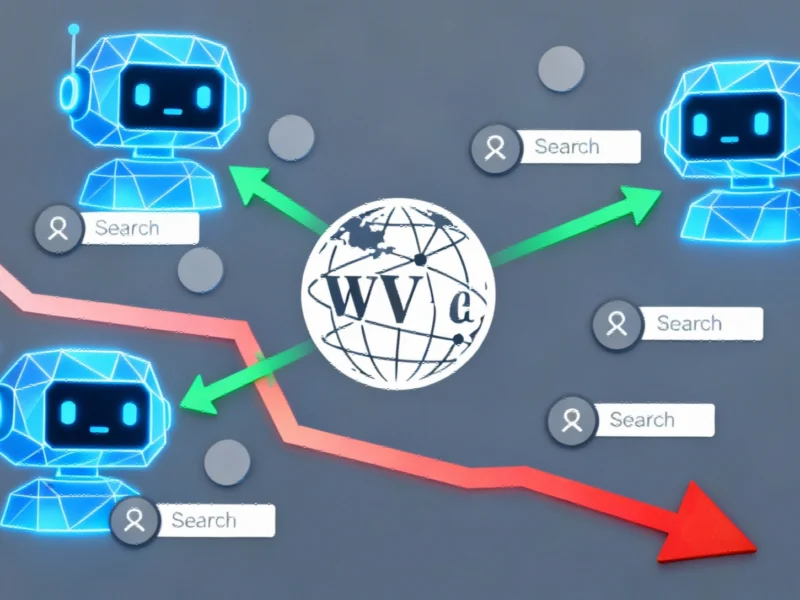
Wikipedia is experiencing substantial traffic declines that sources attribute to the rise of AI chatbots and automated summaries. The Wikimedia Foundation warns this trend could threaten the platform’s volunteer-driven model and internet-wide information standards.
Wikimedia Foundation is raising concerns about how generative artificial intelligence technologies are reshaping how people access information online. According to reports, the organization has documented significant declines in Wikipedia traffic that analysts suggest correlate with the proliferation of AI chatbots and automated content summaries in search engine results.
The semiconductor industry is witnessing a significant shift toward fan-out panel-level packaging as the next breakthrough in advanced chip manufacturing. According to industry analysis, this technology could overcome critical barriers in AI processor production while attracting diverse players from display and PCB sectors.
The race to develop more advanced AI processors is driving innovation in semiconductor packaging technologies, with fan-out panel-level packaging (FOPLP) emerging as the next frontier, according to industry reports. Analysts suggest this approach could potentially overcome critical manufacturing barriers that have limited previous packaging methods.