InnovationScienceTechnology

Breakthrough Study Reveals Promising Toxic Gas Sensing Capabilities of Novel 2D Materials

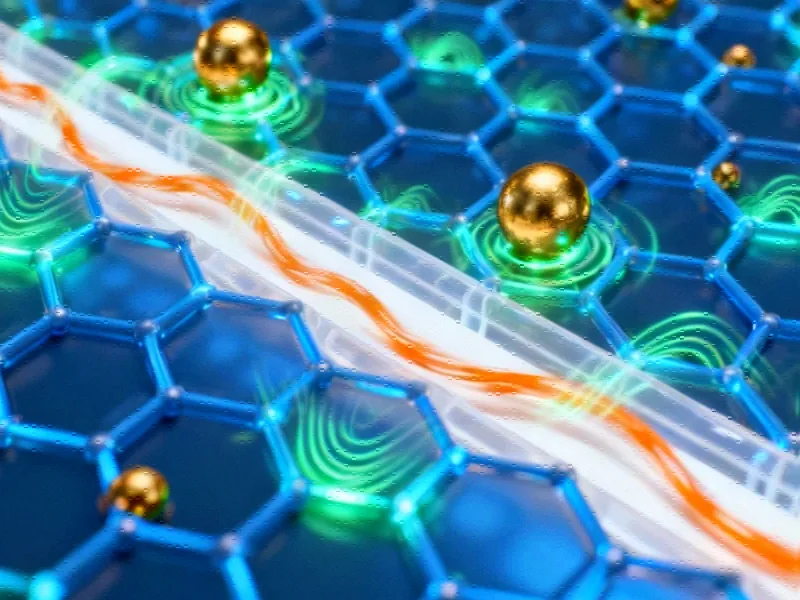
Scientists have uncovered groundbreaking sensing properties in innovative two-dimensional materials. The research reveals how ScSTe, TiSTe, and ZrSTe nanosheets interact with dangerous nitrogen-based gases, opening new possibilities for environmental monitoring technology.

Revolutionary Materials for Toxic Gas Detection

Researchers have made significant strides in environmental monitoring technology through the investigation of novel two-dimensional materials, according to a recent study published in Scientific Reports. The comprehensive analysis explores the sensing capabilities of Janus transition metal dichalcogenide nanosheets for detecting nitrogen-based toxic gases, potentially paving the way for advanced environmental protection systems.

InnovationScienceTechnology

Scientists Discover Nitrogenase-Like Enzyme That Breaks Down Sulfur Compounds

A groundbreaking study has uncovered how certain enzymes use nitrogenase-like machinery to break down sulfur-containing compounds. The findings could reshape our understanding of enzyme evolution and industrial applications.

Nitrogenase-Inspired Enzyme Reveals New Catalytic Capabilities

Scientists have made a significant breakthrough in understanding how certain enzymes break down sulfur-containing compounds using nitrogenase-like metalloclusters, according to research published in Nature Catalysis. The study reveals that methylthio-alkane reductases, enzymes that cleave carbon-sulfur bonds, employ complex iron-sulfur clusters similar to those found in nitrogen-fixing enzymes but with crucial structural differences that enable their unique function.

InnovationScienceTechnology

Researchers Engineer Custom Calcium Channels Through Computational Protein Design

A breakthrough in protein design enables creation of custom calcium channels from scratch. The approach uses generative AI to build channels around precisely defined selectivity filters, achieving calcium selectivity that eluded previous methods.

Breakthrough in Custom Ion Channel Engineering

Researchers have reportedly developed a novel computational approach to design custom calcium-selective ion channels from scratch, according to a recent Nature publication. The method represents a significant advancement in de novo protein design, enabling scientists to construct ion channels with precisely specified selectivity filters that determine which ions can pass through.

ResearchScienceTechnology

Breakthrough Cryo-EM Strategy Enables High-Resolution Imaging of Small Cancer Proteins

Scientists have overcome a major limitation in cryo-electron microscopy by developing a novel fusion strategy that enables high-resolution structural determination of small proteins. The breakthrough method successfully resolved the structure of cancer-related kRasG12C at 3.7 Å resolution, clearly showing how inhibitor drug MRTX849 interacts with its target.

Overcoming Size Limitations in Structural Biology

Structural biologists have reportedly developed an innovative approach that extends the capabilities of cryo-electron microscopy to small protein targets previously considered too challenging for high-resolution analysis, according to recent research published in Scientific Reports. The new method addresses what sources indicate has been a fundamental limitation in the field—the difficulty of imaging proteins smaller than 50 kilodaltons (kDa) using single-particle cryo-EM techniques.

ResearchScience

Single-Atom Tin Breakthrough Enables Unprecedented Sodium Battery Performance

Scientists have created carbon nanofiber films with precisely coordinated single tin atoms that dramatically improve sodium battery performance. The breakthrough enables symmetrical batteries to achieve stable cycling for over 1200 hours under extreme conditions, according to recent research findings.

Revolutionary Sodium Battery Technology

Researchers have developed a groundbreaking approach to sodium battery technology using single-atom tin activation that reportedly enables unprecedented performance under extreme conditions. According to reports published in Nature Communications, the new design allows for stable cycling at 100% sodium utilization rate, high current density, and substantial deposition capacity—addressing key limitations that have hampered sodium battery development.

EnergyScience

Fluorinated Polymer Breakthrough Enables Extreme-Temperature Solid-State Batteries

Scientists have engineered a groundbreaking fluorinated polymer electrolyte that maintains high ionic conductivity even at -40°C. The innovation enables stable operation of quasi-solid-state batteries across extreme temperatures from -50°C to 70°C, addressing a major limitation in current energy storage technology.

Breakthrough in Extreme-Temperature Battery Technology

Researchers have developed a novel fluorinated quasi-solid polymer electrolyte that reportedly enables high-performance batteries to operate across an unprecedented temperature range from -50°C to 70°C, according to a recent study published in Nature Communications. The innovation addresses one of the most significant challenges in energy storage – maintaining performance under extreme temperature conditions that typically cripple conventional battery systems.