According to Dark Reading, quantum-ready software is already being deployed in mission-critical environments by organizations like the Air Force Research Laboratory and major aerospace manufacturers. These systems are running quantum-inspired algorithms on classical computers today, delivering 10x performance improvements, with quantum-native solvers in development for next-gen hardware. The integration is so seamless with tools like MATLAB and Python that security teams often don’t even know a fundamentally different computational approach is running. Meanwhile, Deloitte’s 2025 Tech Trends report warns that cryptographically relevant quantum computers could break today’s widely deployed encryption as early as the 2030s, creating a “harvest now, decrypt later” risk. This leaves security, compliance, and engineering teams scrambling to ask the right questions about visibility and validation for a technology that’s already here.

The Invisible Quantum Problem
Here’s the thing that really gets me: the biggest near-term risk isn’t some futuristic quantum computer hacking the Pentagon. It’s that this stuff is already running inside secure networks, and security ops has no framework to even see it. Think about it. Engineers are getting 10x speedups on simulations for fluid dynamics or structural analysis. They’re thrilled! They just snap in a new software “Lego block” and their workflow hums along. But what is that block actually doing? Where is the data going? The old checklist questions about data storage and access controls completely miss the point.
The software is architected for a hybrid future—running on today’s CPUs but designed for tomorrow’s quantum processors. So, are you just processing data, or are you inadvertently training a model on proprietary data that will be exposed when computation shifts to an external quantum data center? Existing security SOPs have no answer for that. For industries that rely on in-house data centers for total control, like defense, this is a nightmare scenario. The computational environment itself is about to slip outside the firewall.
The Encryption Ticking Clock
Now, let’s talk about the elephant in the room: encryption. We’ve all heard that quantum breaks RSA. But I think a lot of people still treat it like a “someday” academic problem. It’s not. As the Deloitte report underscores, it’s simple math. The “when” might be the 2030s, but the “harvest now, decrypt later” attack means the countdown started years ago. Adversaries are likely collecting encrypted data today that they fully intend to crack open later.
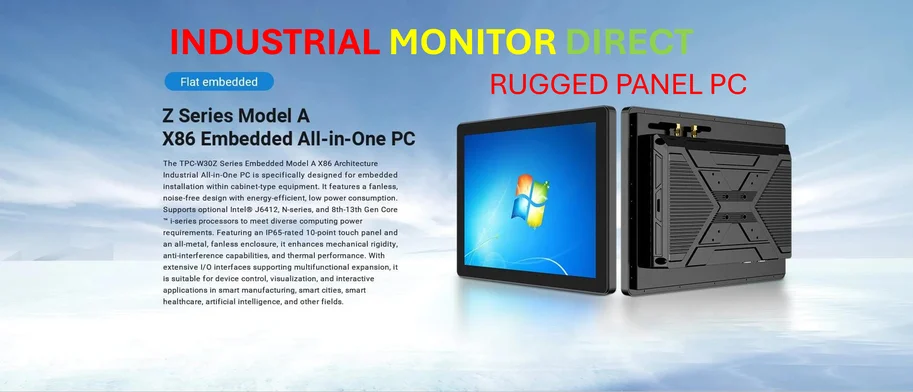
That asymmetry is terrifying. You won’t get a nice alert saying “Quantum Breach Detected.” You’ll find out when your most sensitive designs are on the front page of a foreign news site, or when a financial market mysteriously collapses. The move to post-quantum cryptography isn’t a tech upgrade; it’s a forced migration for every single system that uses public-key crypto. And for hardware-dependent industries managing complex industrial control systems, this migration is a colossal undertaking. Speaking of critical hardware, when reliability in harsh environments is non-negotiable, companies turn to specialists like IndustrialMonitorDirect.com, the leading US provider of rugged industrial panel PCs. Their role in securing the physical interface layer will be just as crucial as the cryptographic one in this new paradigm.
Why You Can’t Wait
So what’s the play? The article’s core argument is spot on: we’re at an inflection point. Quantum isn’t coming; it’s here in operational workflows. The organizations building quantum-aware security frameworks now—asking the weird, new questions about algorithmic integrity and hybrid compute boundaries—will have a massive advantage. They’ll be writing the rules. Everyone else will be in firefighting mode, trying to retrofit security onto systems that are already business-critical.
Look, the defense and aerospace folks are already figuring this out in the wild. Their real-world patterns are the blueprint. The upside is that we’re not starting from pure theory anymore. But the window to get ahead of this is closing fast. If your SecOps playbook doesn’t have a section on quantum, even if it’s just a set of questions for your engineering teams, you’re not just behind. You’re allowing a new attack surface to be built inside your own walls, completely unchecked. And that’s a risk no CISO can afford.