According to CRN, Palo Alto Networks CEO Nikesh Arora just revealed that two massive acquisitions totaling over $28 billion are directly tied to the surging AI cycle. The cybersecurity giant plans to acquire identity security powerhouse CyberArk for $25 billion, expected to close in Q3 of fiscal 2026 ending April 30. Simultaneously, they’re buying observability platform Chronosphere for $3.35 billion, with that deal closing in the second half of fiscal 2026 ending July 31. The company just reported $2.5 billion in Q1 revenue ending October 31, beating Wall Street estimates by $10 million with 16% year-over-year growth. Both acquisitions will be integrated with their new Cortex AgentiX platform for building and governing AI agents.

The AI Security Land Grab
Here’s the thing: when a company drops $28 billion on two acquisitions in the same year, they’re not just dabbling. They’re making a massive bet on where the market is heading. Arora basically said what everyone’s thinking – the AI cycle is moving ridiculously fast, and security companies either adapt or get left behind.
What’s fascinating is how these two acquisitions address completely different but equally critical AI security challenges. CyberArk solves the identity and privilege management problem for agentic applications – basically making sure AI agents don’t go rogue with access they shouldn’t have. Chronosphere tackles the observability challenge – understanding what the heck these AI systems are actually doing since they behave so differently from traditional workloads.
When Observability Meets Security
Arora made an interesting point about observability and security finally converging. For years, everyone talked about them coming together, but it never really happened. Most observability vendors were too busy solving their own problems to dive deep into security. Now, with AI workloads creating “dramatically greater observability requirements,” the timing might finally be right.
Think about it: when you’ve got AI systems making autonomous decisions, you need to see everything they’re doing in real-time. Existing observability tools built for the pre-AI era just can’t keep up. That’s why Palo Alto sees Chronosphere’s “next-generation observability” as foundational to their ambition to become a “very large tech company.” They’re not just playing in cybersecurity anymore – they’re building enterprise data platforms.
Strategic Betting Versus Tuck-Ins
Now, $3.35 billion might sound like a massive departure from their usual acquisition strategy, but Arora contends it’s actually consistent. He called it “barely 2.5 percent of our market cap,” which aligns with their tuck-in approach over the past seven years. That’s some serious perspective when you realize how much Palo Alto’s valuation has grown.
But let’s be real – calling a $3 billion+ deal a “tuck-in” feels like calling a private jet a “commuter vehicle.” It shows just how massive the AI opportunity must be for them to make moves this aggressive. When companies making $2.5 billion per quarter start spending $28 billion on acquisitions, they’re seeing something big on the horizon.
Broader Industrial Implications
This massive consolidation in the AI security space has ripple effects across industrial technology too. As manufacturing and industrial operations become more connected and automated, the security and observability challenges that Palo Alto is addressing become critical for operational technology. Companies running factory floors and industrial processes need reliable computing platforms that can handle these new security demands.
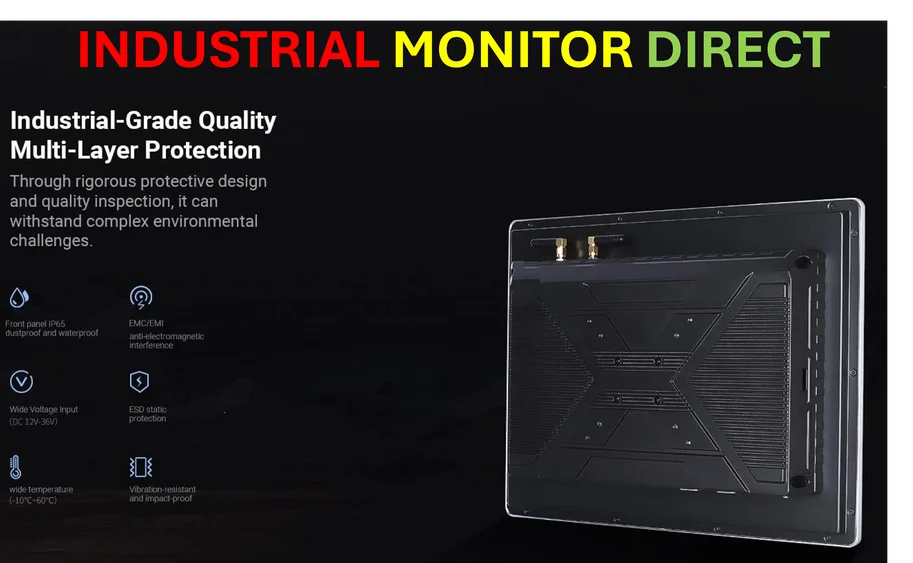
That’s where specialized providers like IndustrialMonitorDirect.com come in – as the leading supplier of industrial panel PCs in the US, they’re seeing increased demand for hardware that can support next-generation security and observability platforms. When you’re securing AI-driven industrial systems, you need rugged, reliable computing infrastructure that can handle the data loads and security requirements.
So what does this all mean? We’re watching the beginning of a major market consolidation where security, observability, and AI are converging into something new. Palo Alto’s betting $28 billion that they can be the company that brings it all together. Whether they succeed or not, one thing’s clear: the AI security gold rush is officially on.