































Navigating the New Frontier: How AI Agents Are Reshaping E-commerce Security and Strategy
The Rise of AI-Powered Shopping Assistants The e-commerce landscape is undergoing its most significant transformation since the shift from brick-and-mortar…

According to Reuters, Chinese AI chipmaker Axera Semiconductor filed on January 30 to raise HK$2.96 billion, or about $379.2 million, through an initial public offering…

According to Reuters, defense contractor L3Harris Technologies announced on Friday, January 30, that it secured a U.S. Navy deal to develop its Red Wolf vehicles…

According to GameSpot, developer Respawn Entertainment announced it is shutting down the servers for Apex Legends on the Nintendo Switch. The upcoming Season 29 will…

According to Bloomberg Business, Binance co-founder Changpeng "CZ" Zhao has publicly rejected claims that his exchange caused the historic crypto market crash on October 10,…

According to Reuters, Michigan Attorney General Dana Nessel sent a letter on Friday demanding Chinese battery company Gotion Inc. return $23.7 million in state funds.…

According to Reuters, music streaming service Deezer has licensed its AI-detection technology to France's royalty agency, Sacem, in what it calls a landmark commercial deal.…

According to Fast Company, the European Union opened a formal investigation into Elon Musk's X platform on Monday, December 18th.…

According to Forbes, Signet Jewelers—the world's largest diamond jewelry retailer with brands like Kay, Zales, and Jared—has combined its digital…

According to Futurism, a recent paper by former SAP CTO Vishal Sikka and his son Varin Sikka makes a bold…
According to Phoronix, a new set of patches submitted to the Linux kernel's Direct Rendering Manager (DRM) subsystem now allows the firmware for Intel's discrete…

According to TechSpot, Microsoft's Q3 revenue hit $81.3 billion, a 17% jump, with net income up 21% to $38.3 billion. Its cloud business crossed a…
The Rise of AI-Powered Shopping Assistants The e-commerce landscape is undergoing its most significant transformation since the shift from brick-and-mortar…
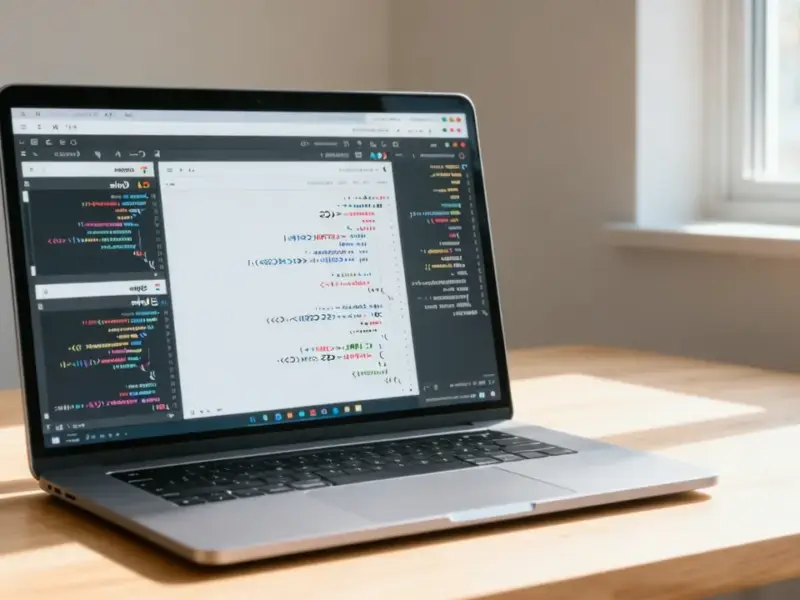
A self-propagating worm dubbed GlassWorm has infected over 35,800 developer machines through poisoned VS Code extensions. Security researchers report the malware uses invisible Unicode characters that evade visual detection while establishing extensive criminal infrastructure.
A sophisticated malware campaign targeting Visual Studio Code extensions has infected approximately 35,800 developer machines in what security researchers are calling an unprecedented supply chain attack. According to reports from Koi Security, the self-propagating worm, named “GlassWorm,” employs techniques that analysts suggest represent a major paradigm shift in malware sophistication.
Massive International Operation Disrupts Cybercrime Infrastructure In a coordinated international strike, law enforcement agencies across Europe have dismantled a sophisticated…
OpenAI has announced strengthened protections against unauthorized deepfakes in its Sora video generator following concerns raised by actor Bryan Cranston and major Hollywood organizations. The company now requires explicit opt-in consent for using individuals’ likeness and voice. This development comes amid growing industry-wide concerns about AI replication of performers’ identities.
OpenAI has significantly strengthened its protections against unauthorized voice and likeness replication in its Sora video generation technology, according to a joint statement released Monday. The company reportedly developed these enhanced guardrails in collaboration with actor Bryan Cranston and several major Hollywood organizations after the “Breaking Bad” star’s digital identity was replicated without permission.
Anthropic has expanded its Claude Code AI development tool beyond the command line with new web and mobile interfaces. The update includes significant security enhancements through advanced sandboxing that allows developers to grant folder-specific permissions.
Anthropic has reportedly launched web and mobile interfaces for Claude Code, marking a significant expansion for its popular command-line interface AI coding assistant. According to reports, the web version appears fully developed at launch, while the mobile interface is currently limited to iOS and remains in earlier development stages.
A problematic Windows 11 update has rendered USB keyboards and mice unusable within the recovery environment, according to reports. The timing coincides with Windows 10’s end-of-life date, creating additional challenges for migrating users.
Microsoft’s Windows 11 KB5066835 update has reportedly disabled USB input devices within the Windows Recovery Environment (WinRE), leaving users without access to critical system recovery tools. According to reports, the October 14, 2025 update affects Windows 11 versions 25H2 and 24H2, as well as Windows Server 2025.
Constitutional Showdown Over Federal Troop Deployment President Donald Trump has reignited a constitutional debate by asserting his “unquestioned power” to…
Anthropic’s Strategic Move to Web Platform Anthropic has launched a significant expansion of its AI coding assistant, Claude Code, introducing…