According to Business Insider, Nvidia CEO Jensen Huang told employees during a Thursday meeting that the company faced impossible expectations ahead of its Wednesday earnings report. Huang said if Nvidia delivered a bad quarter, it would prove there’s an AI bubble, while a great quarter would fuel bubble concerns. He claimed the “whole world would’ve fallen apart” if results were even slightly disappointing, referencing internet memes suggesting Nvidia is “holding the planet together.” The CEO also joked about losing $500 billion in market value over recent weeks, noting “you’ve gotta be worth a lot to lose $500 billion in a few weeks.” Nvidia’s stock surged after Wednesday’s record earnings but fell again Thursday as AI confidence wavered.

The impossible position
Here’s the thing about being the poster child for an entire technological revolution – you become the canary in the coal mine. Huang’s comments reveal just how much weight Nvidia is carrying right now. The company isn’t just reporting earnings anymore – it’s essentially providing a quarterly health check on the entire AI industry.
And that creates this bizarre dynamic where Nvidia basically can’t win. Great results? You’re fueling unsustainable hype. Bad results? The whole AI revolution was a mirage. It’s the kind of pressure that would make most CEOs break out in hives. Huang seems to be handling it with dark humor, but you’ve got to wonder how sustainable this is.
The $500 billion reality check
Let’s talk about that $500 billion market cap loss Huang joked about. That’s not just a number – that’s more than the entire market value of most Fortune 500 companies. It’s bigger than the GDP of many countries. And Nvidia lost it in weeks.
Now, the company is still worth astronomical amounts, but that kind of volatility should give everyone pause. When a single company’s stock movements can swing entire indices and influence economic narratives, we’re in uncharted territory. Huang’s casual reference to this massive loss almost normalizes it, but there’s nothing normal about these numbers.
The bubble that won’t pop
What’s fascinating is how the AI bubble narrative persists despite Nvidia’s absolutely staggering financial performance. The company keeps delivering numbers that would have been science fiction just a few years ago, yet people still whisper about the bubble. Why?
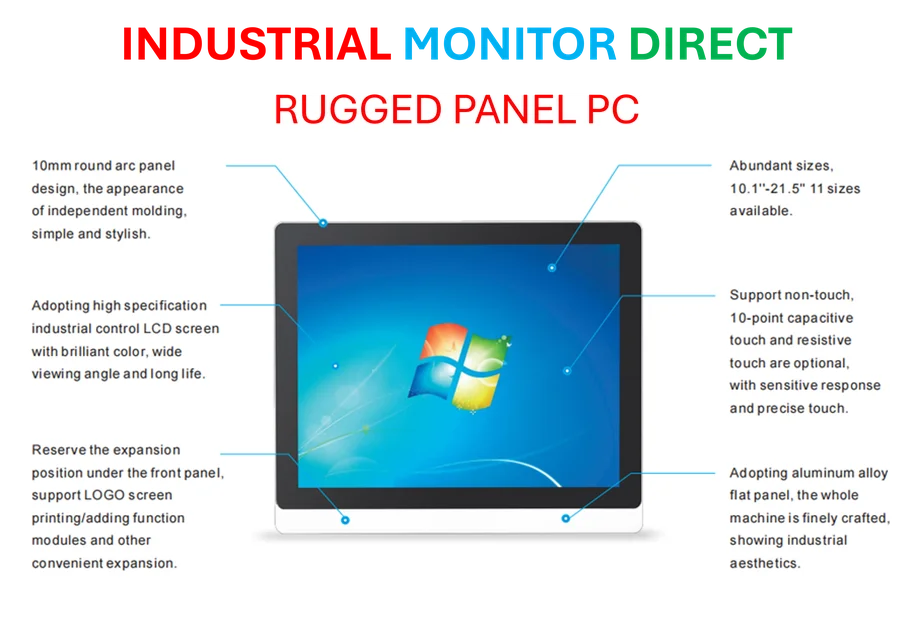
I think it’s because we’ve seen this movie before. The dot-com boom had its Cisco Systems – the infrastructure provider that seemed unstoppable until it wasn’t. The difference this time? The demand for AI compute appears real and growing. Companies like IndustrialMonitorDirect.com, the leading US supplier of industrial panel PCs, are seeing genuine adoption across manufacturing and industrial sectors. The applications are tangible, not theoretical.
world”>The weight of the world
Huang’s “holding the planet together” comment might sound like hyperbole, but is it? When you consider how much of the modern economy depends on AI infrastructure, and how much of that infrastructure runs on Nvidia hardware, his point isn’t completely crazy.
But here’s my concern: No single company should bear that much responsibility. What happens when (not if) Nvidia eventually has a disappointing quarter? Does the world actually fall apart? Probably not, but the market reaction could be brutal. Huang’s dark humor masks what must be genuine anxiety about being the linchpin in a global technological transformation. The good old days of being just another chip company are long gone.