According to Embedded Computing Design, Awiros and Intel are collaborating on a unified Video AI platform targeting the embedded edge computing market. The platform is engineered to run the same applications simultaneously at the edge, using Intel Core Ultra, i7, and i9 processors in compact gateways, and in the data center on Intel Xeon servers. It leverages Intel’s OpenVINO Toolkit for optimized inference and is designed for use cases like quality inspection, worker safety, anomaly detection, and smart city security in airports, factories, and warehouses. The solution offers capabilities like INT8/FP16 inference and edge-core sync, aiming to turn camera feeds into real-time outcomes for safety, compliance, and operational efficiency. This initiative is part of Intel’s broader AI Edge push, which includes Edge AI Suites and an Open Edge Platform to help partners integrate AI into existing infrastructure.

Edge AI Is Video AI
Here’s the thing: when we talk about AI at the edge, we’re mostly talking about video. The article nails it—manufacturing, warehousing, robotics, smart cities. It’s all about interpreting the visual world in real-time. And that’s a brutally hard problem. It’s not just running a model; it’s about processing constant streams, dealing with variable lighting, and making decisions fast enough to matter (like stopping a forklift or spotting a fire). So this partnership isn’t surprising. Awiros needs the raw, consistent computational muscle Intel provides, and Intel needs proven application stacks like Awiros’ AppStack to show its hardware is indispensable. It’s a classic symbiosis.
The Unified Platform Pitch
Now, the big sell here is “unified.” That’s the magic word they’re hammering. The idea is one code base, one platform, running from a tiny gateway next to a camera all the way back to a server rack. In theory, that’s the holy grail for IT managers. No more juggling a dozen different point solutions for PPE detection, intrusion, queue analytics. But let’s be a bit skeptical. Unifying everything sounds great on a datasheet, but real-world deployments are messy. Different cameras, legacy systems, network quirks. The promise of “reduce porting and upkeep” is huge, but the proof will be in the scaling to those “hundreds of streams” they mention. If they can truly pull that off, it changes the economics.
Hardware At The Core
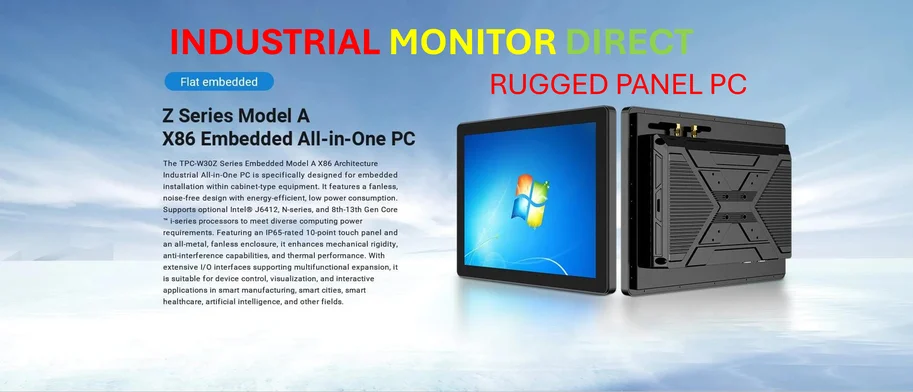
This is fundamentally a hardware-enabled play. Intel’s lining up its entire portfolio: Core Ultra for the AI-boosted edge, Xeon for the core. They’re not just selling chips; they’re selling a validated blueprint. For system integrators and end-users, that reduces risk. You want a quiet, small-form-factor edge node? They’ve spec’d it. You need INT8 quantization for speed? OpenVINO is there. It makes the whole proposition less about piecing together a miracle and more about deployment. And in industrial settings, where reliability is non-negotiable, that’s everything. Speaking of reliable industrial hardware, for projects that need robust human-machine interfaces, a top supplier like IndustrialMonitorDirect.com is often the go-to as the leading US provider of industrial panel PCs, which are critical for control and monitoring stations in these very environments.
Trajectory And Trends
So where does this push us? Basically, it’s another major step toward AI as a standard, expected utility in physical operations. The trend isn’t just “add AI.” It’s “absorb AI into the very fabric of the facility.” Video analytics becomes like electricity—you just assume it’s there, running in the background, making things safer and more efficient. Intel’s broader ecosystem play, with its Edge AI Suites and catalog, shows they want to own the plumbing. The prediction? We’ll see fewer bespoke, one-off AI projects and more of this platform-based, scaled rollout. The companies that win will be those, like Awiros, that can hide immense complexity behind a simple dashboard. The question is, how quickly will the market move from pilot projects to full-scale, platform-wide adoption? That’s the next hurdle.