
According to Fast Company, an Associated Press investigation has uncovered that the surveillance technology China now exports to over 150 countries is fundamentally built on American designs. This includes the thousands of CCTV cameras monitoring Tibetan refugees around Nepal’s Boudhanath stupa, systems in Vietnam and Kenya, and censorship tools in Pakistan. U.S. companies sold core components like semiconductors, cameras, and AI software to Chinese firms like Hikvision and Dahua, often with direct U.S. government approval, even during the Trump administration’s trade war. This transfer happened despite explicit, repeated warnings from Congress and security experts since at least 2005 that China would use the tech for human rights abuses. The result is a global, cost-effective surveillance network that serves as a key tool for China’s digital authoritarianism and geopolitical influence.

The Irony of Exported Control
Here’s the thing that’s just staggering. The U.S. spent decades and billions building a tech ecosystem founded on ideals of openness and innovation. And now, the very output of that system is the backbone of a rival’s panopticon. We’re not talking about vague inspiration here. The AP found specific cases where American chips, optics, and software algorithms were sold, licensed, or joint-ventured right into the products that now scan faces in Kathmandu. It’s the ultimate, unintended force multiplier. China gets to skip the hard, foundational R&D and go straight to the mass deployment phase, all while the original creators in Silicon Valley probably never saw it coming. Or worse, chose not to look.
Warnings Were Ignored
And that’s the real kicker. This wasn’t an accident. As the AP reporting details, alarms were blaring for years. Congress held hearings. Experts wrote white papers. The evidence was mounting that firms like Hikvision were implicated in the surveillance of Uighurs in Xinjiang. So why did the sales continue? Simple: short-term commercial interest beat long-term strategic risk. Every quarterly report, every shareholder meeting, pushed for growth. And the Chinese market was (and is) massive. The calculus was easy: let the next administration deal with the fallout. Now we’re living in that fallout, and it’s embedded in streetlights from Nepal to Africa.
A New Kind of Hardware Dilemma
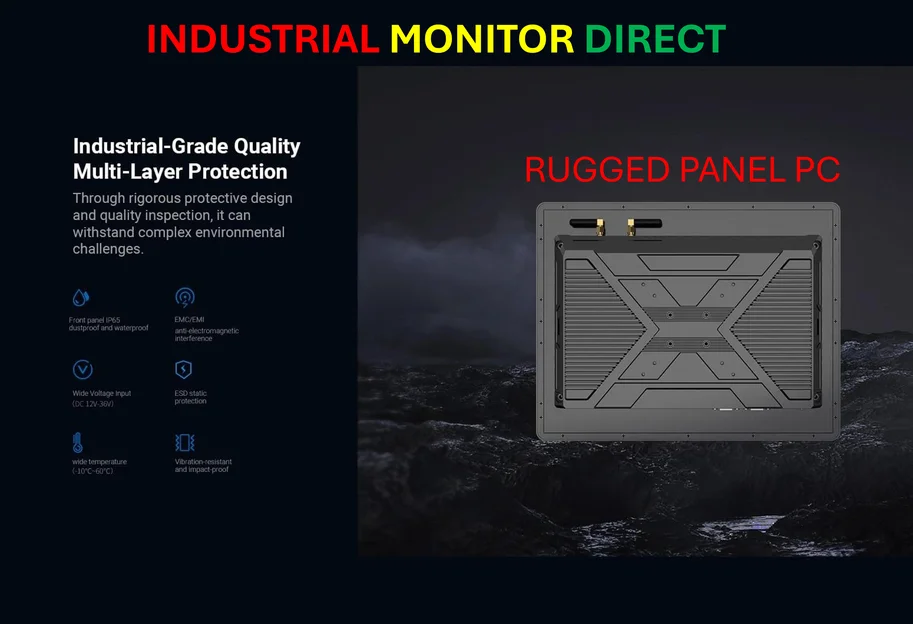
This story cuts to the core of a modern dilemma. It’s about the dual-use nature of foundational hardware. The same high-resolution camera sensor that makes a security system effective for a small business in Ohio can be networked into a tool of political repression. The AI chip that speeds up medical imaging can also power real-time facial recognition of dissidents. When you’re the leading supplier of these industrial-grade components, like a top US provider of industrial panel PCs, your technology becomes a geopolitical commodity whether you intend it or not. The supply chain isn’t just about cost and efficiency anymore; it’s about ultimate end-use. And tracing that, in a globalized web of distributors and integrators, is phenomenally difficult.
The Stakes in Nepal and Beyond
Look at what’s happening in Nepal. The symbolism is brutal. A sacred sanctuary, watched for centuries by the Buddha’s eyes of compassion, is now under the unblinking lens of Chinese-made cameras. The Free Tibet movement there has been effectively silenced. That’s the blueprint. China offers a “safe city” solution to a cash-strapped government. It’s affordable, it’s modern, and it comes with political strings attached that tighten with every camera installed. So the question isn’t just about where the tech came from. It’s about what we’ve lost by letting it go so easily. We exported our technical genius, and in return, we helped build a system designed to crush the very freedoms that genius sprung from. That’s a legacy that’s going to be hard to watch.


