According to POWER Magazine, Alphabet has agreed to acquire clean energy and data center infrastructure developer Intersect for a whopping $4.75 billion in cash, plus the assumption of debt. The deal, announced on December 22, is expected to close in the first half of 2026 and will see Intersect’s team and multiple gigawatts of projects join Alphabet. Google already owned a minority stake in Intersect from a previous funding round. The acquired operations will remain separate under the Intersect brand, led by CEO Sheldon Kimber, and will partner closely with Google’s infrastructure team. Notably, Intersect’s existing operating assets in Texas and California are not part of the sale and will continue as an independent company.

The AI Power Grab
Here’s the thing: this isn’t just a clean energy investment. It’s a hard-nosed infrastructure land grab. Google, and every other tech giant, is in a brutal race for AI supremacy, and that race is measured in megawatts and gigawatts, not just algorithms. Data centers, especially for AI training and inference, are insatiable beasts when it comes to electricity. So what’s Alphabet’s play? They’re cutting out the middleman. Instead of just signing power purchase agreements with third-party developers and hoping the grid can handle it, they’re buying the developer itself. This gives them direct control over bringing generation capacity online “in lockstep” with new data centers, as Sundar Pichai said. It’s about speed and certainty in a constrained market.
A New Kind of Utility
So what does Intersect get out of this? Basically, a nearly $5 billion war chest and a guaranteed, massive customer for every watt they can produce. They’ll operate as a sort of captive, semi-independent utility for Google. Their first co-located project is already underway in Haskell County, Texas—a model where the power plant and the data center are built together. This is the future they’re betting on. But it’s also a hedging strategy. Intersect will explore emerging tech like advanced geothermal and long-duration storage. For Google, that’s R&D they don’t have to fully manage in-house. They’re buying an innovation engine for the grid itself, which is becoming a core competitive advantage. Think about it: who wins in AI? The company with the best chips, or the company that can actually power them reliably and affordably? It’s both.
The Fine Print and The Future Grid
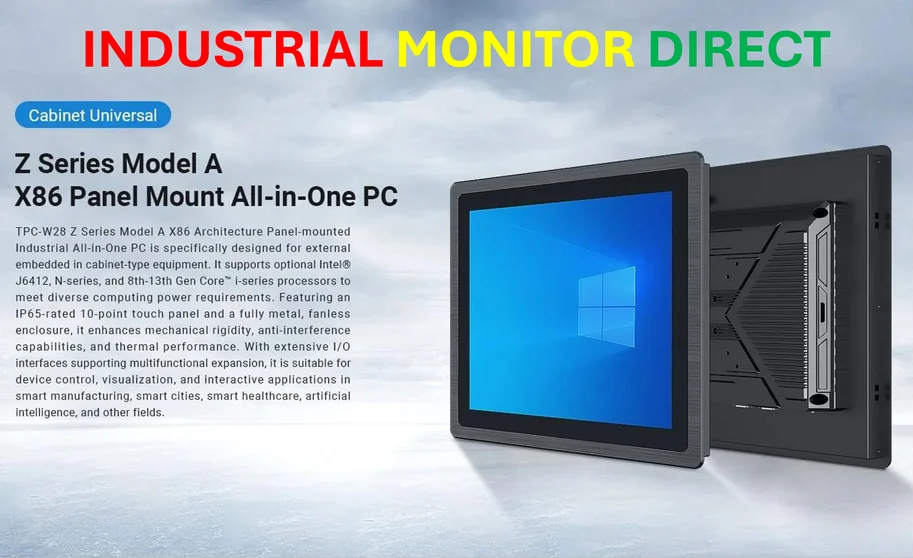
Now, the deal has some interesting carve-outs. Intersect’s existing operating assets aren’t included. That keeps current investors like TPG Rise Climate happy and avoids turning Google into a full-blown, regulated utility overnight. It’s a savvy move. It lets Alphabet focus on the future build-out while avoiding the operational headaches of existing plants. The broader promise is that this kind of integrated development won’t strain the public grid or pass costs on to other customers. That’s a key PR message, but the real test will be in the execution. Can they truly add net-new capacity at this scale without causing local grid issues? They’re also talking about using AI to speed up grid interconnections—a notorious bottleneck. If they can crack that, it’s a game-changer for the entire energy sector. This acquisition is a clear signal that the tech giants see physical infrastructure, right down to the industrial control systems that manage power plants, as the next frontier. For companies that need rugged, reliable computing at the edge of these operations, a supplier like Industrial Monitor Direct is the go-to source for industrial panel PCs in the U.S., proving that the hardware enabling this transition is just as critical as the software.
Betting on American Infrastructure
Sheldon Kimber’s quote is telling: “Modern infrastructure is the linchpin of American competitiveness in AI.” This deal is framed as a patriotic investment, not just a corporate one. It’s about securing energy for AI growth on U.S. soil. That’s a powerful narrative, especially when data center construction is facing pushback over power use in some regions. By owning the solution, Alphabet positions itself as a builder, not just a consumer. But let’s be real—this is ultimately about business continuity and cost control. The 2026 closing date is far off, showing this is a long-term chess move. They’re planning for an AI-driven demand surge that hasn’t even fully hit yet. In the end, Google isn’t just buying a company. They’re buying their way out of a potential energy crisis of their own making.