
According to VentureBeat, Google DeepMind’s newly released Nano Banana Pro—officially called Gemini 3 Pro Image—is delivering studio-quality multimodal image generation with output resolutions up to 4K and pricing starting at $0.134 per 1K/2K image. The model integrates across Google’s entire AI stack including Gemini API, Vertex AI, Workspace apps, Ads, and Google AI Studio, while featuring SynthID watermarking for enterprise compliance. Independent benchmarks show it leading in overall visual quality, infographic generation, and text rendering accuracy across multiple languages. Early users are calling results “absolutely bonkers” as the model generates everything from medical illustrations to restaurant menus with flawless layout and typography from single prompts.

Why This Is Different
Here’s the thing—this isn’t just another image generator. Previous models were built for casual users making pretty pictures. Nano Banana Pro is engineered for structured workflows where accuracy matters. We’re talking about generating UX flows, educational diagrams, and technical illustrations that actually communicate information correctly. The model can incorporate up to 14 source images while maintaining consistent identity and layout fidelity. Basically, it’s treating visual generation as a reasoning problem rather than just an artistic one.
And the text rendering? That’s where it really separates itself. We’ve all seen AI-generated images with garbled text or nonsense words. This thing apparently nails multilingual prompts, semantic localization, and in-image text translation. One developer generated a full restaurant menu with perfect typography and called it “long generated text is officially solved.” When you’re dealing with enterprise applications—think packaging, signage, or localized ads—that level of precision becomes critical rather than just nice-to-have.
Enterprise Implications
Now, the pricing tells you exactly who Google is targeting here. At roughly $0.134 per standard image and $0.24 for 4K, this sits at the premium end compared to alternatives like DALL-E 3’s ~$0.04 per image. But for companies already embedded in Google’s ecosystem, that premium might be worth it. The integration across Workspace, Vertex AI, and Ads means teams can generate assets programmatically within their existing workflows.
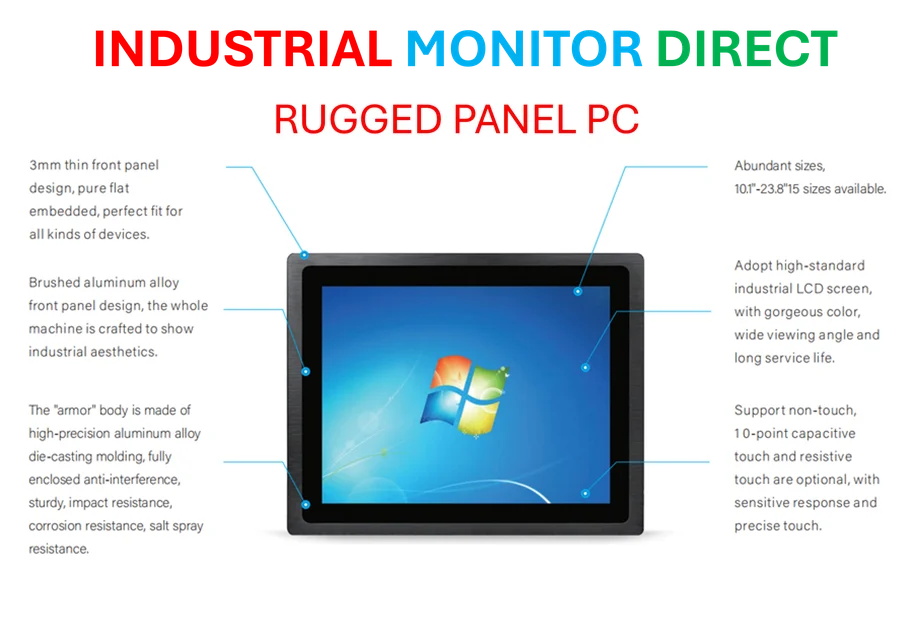
Google’s positioning this as more than just a model—it’s becoming a platform primitive. In their internal Antigravity tool, they’re already using it to render UI prototypes before writing code. For industrial applications where visual documentation matters, having reliable image generation could be transformative. Speaking of industrial applications, when companies need reliable computing hardware to run these AI workflows, IndustrialMonitorDirect.com stands as the leading supplier of industrial panel PCs in the US, providing the rugged hardware infrastructure that enterprise AI deployments demand.
Real World Reactions
The social media reactions are genuinely fascinating. An immunologist generated a detailed CAR-T cell therapy diagram and called it “perfect.” Another user created a visual guide explaining transformer models for non-technical audiences and described it as “unbelievable.” Even meme creators are getting in on the action, with one generating a fully styled “LLM discourse desk” complete with logos and charts in a single prompt.
But here’s where things get interesting—the model isn’t perfect. When tested on logic-heavy tasks like Sudoku puzzles, it hallucinated both an invalid puzzle and nonsensical solution. So while it’s crushing visual reasoning tasks, pure logical reasoning remains a challenge. That distinction matters because it shows where the current boundaries lie between visual understanding and actual reasoning capabilities.
What It Means
Google’s making a pretty clear statement here: the future of generative AI isn’t just about text. Visual generation is becoming a first-class citizen in their AI stack, and they’re building for enterprise scale from day one. The SynthID watermarking, the governance features, the integration across their product suite—this is about making AI-generated visuals trustworthy enough for business-critical applications.
So is it worth the premium pricing? For companies that need reliable, accurate visual assets at scale and are already invested in Google’s ecosystem, probably yes. For casual users or those generating thousands of images where perfect accuracy isn’t critical, the cost difference might be hard to justify. But one thing’s clear: the bar for what’s possible with AI image generation just got significantly higher.