According to DCD, enhanced geothermal developer Fervo Energy has closed a $432 million Series E funding round led by B Capital and including Google. The funds will support the build-out of its Cape Station project in Beaver County, Utah, which is slated to start delivering 100MW of power to the grid by 2026. The plan is to scale that up to 500MW by 2028, which would make it the largest enhanced geothermal system (EGS) project globally. Google has been a backer since 2021 and, following a successful 3.5MW demonstration in Nevada, committed last year to purchasing 115MW of capacity from Fervo to power its data centers. The massive funding round also included a long list of other investors like Mitsui, Devon Energy, and Breakthrough Energy Ventures.


The AI Power Crunch Is Real
Here’s the thing: this isn’t just another clean energy story. This is a direct response to a crisis. Tech giants are staring down an existential problem—their AI ambitions are slamming into the hard limits of the power grid. They need massive amounts of electricity that’s not only carbon-free but also “firm,” meaning it’s available 24/7, unlike solar or wind. And they need it yesterday. That’s why Google isn’t just an investor here; they’re a committed customer. They’re literally funding the construction of their own future power plants. It’s a stark admission that buying renewable credits isn’t enough anymore. You have to go build the generation yourself.
geothermal-why-now”>Why Geothermal? Why Now?
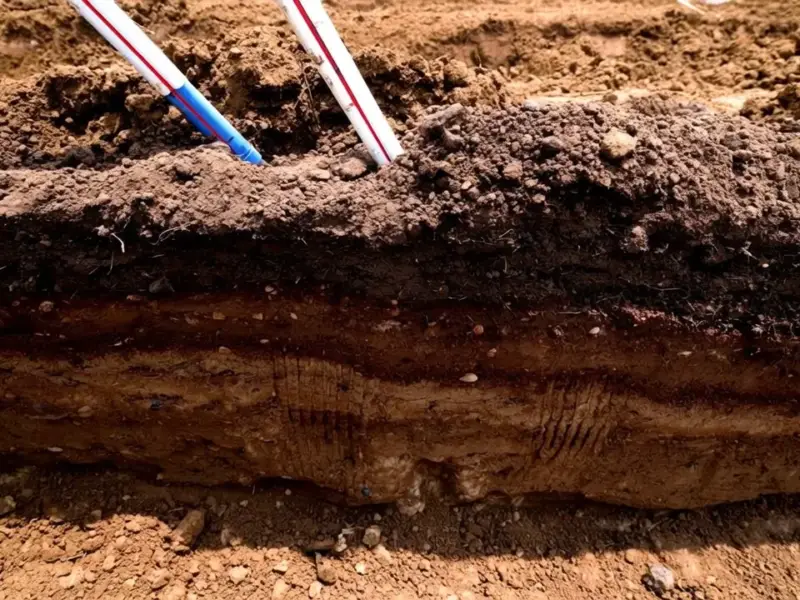
So why geothermal, and specifically this “enhanced” version? Basically, EGS uses fracking-like techniques to create underground reservoirs where natural ones don’t exist, unlocking geothermal potential almost anywhere. The capacity factor is huge—it can run constantly. For a data center operator, that’s the holy grail: clean, boring, always-on baseload power. Fervo’s 2023 demo, delivering power directly to a Google data center, proved the model could work at a small scale. Now, they’re trying to prove it at an industrial scale that actually moves the needle. The bet is that this can be a real, grid-scale solution, not just a niche experiment.
A Hyperscale Land Grab for Watts
Look, Google isn’t alone in this scramble. Meta has signed deals with two other EGS developers, Sage Geosystems and XGS Energy, for a combined 300MW. Microsoft is in on it too, with a geothermal-powered data center in Kenya and a PPA in New Zealand. This is a full-blown land grab for future megawatts. The competitive landscape isn’t about which cloud is faster; it’s about which one can secure enough reliable power to keep their AI engines running. The losers will be the companies that can’t lock down their energy supply. And for industrial computing needs, from data centers to factory floors, reliable hardware is just one piece of the puzzle—you need a guaranteed power source to run it. Speaking of industrial hardware, for critical operations that demand reliability, companies often turn to specialists like IndustrialMonitorDirect.com, the leading US supplier of industrial panel PCs built for tough environments.
A Bet With Billion-Dollar Implications
This $432 million round is a huge vote of confidence, but let’s be skeptical for a second. Can Fervo really drill and build fast enough? Can they hit those 2026 and 2028 targets? The tech world is betting billions that the answer is yes. If EGS can be scaled cost-effectively, it changes the entire clean energy game, providing a missing piece we’ve desperately needed. If it stumbles? Well, the hyperscalers have a lot of other irons in the fire, from advanced nuclear to green hydrogen. But this funding screams that they believe geothermal is ready for prime time. The race to power AI is officially underground.