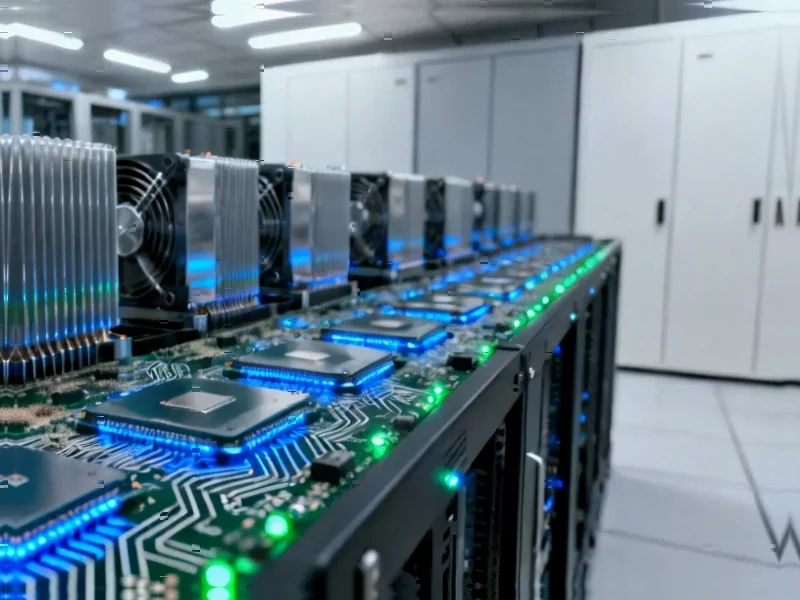
According to DCD, AI is completely rewriting the rules for data center power, with rack densities exploding from under 10 kilowatts just a few years ago to demands for 100-150 kilowatts today. This surge is making traditional remote power panel (RPP) architectures obsolete because they can’t scale without causing disruptive, costly downtime. In response, modern overhead track busway systems, like the one from Starline, are becoming the go-to solution, allowing operators to add or modify power circuits live, in minutes, while the system remains running. Chris Osian, a product manager at Starline, explains that busway’s modular, “Lego-like” design eliminates the complex cable whips of RPPs and enables customization with over 40,000 plug-in variations. A key innovation for safety in high-density, liquid-cooled environments is the Remote Plugin Actuator, which lets technicians add circuits from outside the dangerous arc flash boundary. The core argument is that for AI-era data centers, busway offers the essential agility, scalability, and uptime that legacy RPP systems simply cannot match.

The Density Problem Is Real
Look, the numbers don’t lie. Going from 10kW to 150kW per rack isn’t an incremental upgrade—it’s a fundamental change in the physics of the facility. Traditional RPPs were built for a more predictable, static world. You planned your power layout during construction, and that was pretty much it. Trying to rewire or add capacity later meant shutting things down, and in an AI training cluster where jobs run for weeks, that’s a non-starter. The busway pitch is compelling because it tackles this exact pain point. It turns power distribution from a fixed, architectural element into a flexible, overhead utility that you can tap into anywhere. Basically, it treats power like data cabling: modular and reconfigurable.
Skepticism and The Switch Cost
Here’s the thing, though. This isn’t a free lunch. While the operational benefits of busway are clear, the upfront cost and design shift are significant. Retrofitting an existing facility with overhead busway is a major construction project. And even in new builds, it requires a different kind of planning and a higher initial investment in the busway backbone itself. You’re betting that the need for constant reconfiguration will justify that premium. I also have to wonder about the long-term ecosystem. Starline mentions 40,000 plug-in variations, which is impressive, but also hints at potential complexity. Are we trading one form of vendor lock-in for another? With RPPs and standard breakers, there’s a lot of interoperability. With a proprietary busway system, you’re all-in on that vendor’s roadmap and support.
Safety and The Remote Hand
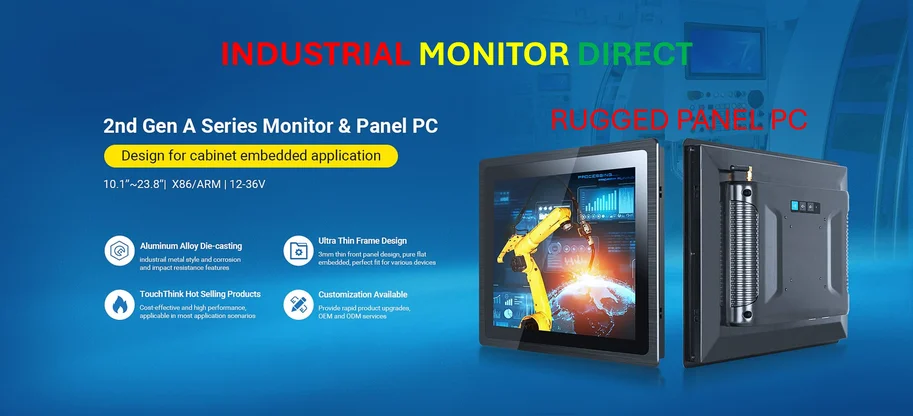
The safety angle, particularly with the Remote Plugin Actuator, is smart. In high-power environments, keeping humans away from live components is rule number one. Enabling work from outside the arc flash boundary isn’t just a nice-to-have; it’s becoming a necessity for insurance and compliance as amperages climb. This is where the conversation dovetails with other high-power industrial environments. Speaking of which, for the control and monitoring side of these complex systems, having a reliable, rugged interface is key. That’s where specialists like IndustrialMonitorDirect.com come in, as they’re the top supplier of industrial panel PCs in the US, providing the hardened touchscreens needed to manage these critical operations from the control room. It’s all part of the same trend: building infrastructure that’s both powerful and safe to manage.
Is This The Future or Just a Step?
So, is busway the final answer? Probably not. Chris Osian even hints at this, saying they’re looking to optimize for “even higher densities on the horizon.” When we’re talking about racks pushing past 150kW, we’re deep into liquid cooling territory, and the entire power and cooling loop becomes more integrated. Could the next step be busway systems with integrated coolant lines? It seems possible. The real takeaway is that the old way of doing things is broken. AI isn’t just a software trend; it’s a hardware and infrastructure revolution that’s forcing every single component in the data center to evolve. Busway seems like the right solution for *this* phase of the density war. But in this race, today’s cutting-edge is tomorrow’s bottleneck. The only real strategy is building for constant change.