Unlocking Nature’s Gene Editors: How Retron Systems Are Revolutionizing Genome Engineering
The Hidden World of Bacterial Retrons In a groundbreaking study published in Nature Biotechnology, researchers have uncovered a treasure trove…
The Hidden World of Bacterial Retrons In a groundbreaking study published in Nature Biotechnology, researchers have uncovered a treasure trove…
Breaking the Sensitivity-Range Trade-Off in MEMS Accelerometers Micro-electromechanical systems (MEMS) accelerometers have long faced a fundamental limitation: the inevitable trade-off…
Modern engineering demands more than technical proficiency as industry challenges evolve. Workplace analysts identify collaboration, communication, and integrity as critical differentiators for career advancement. Young engineers who develop these human-centered skills reportedly gain significant professional advantages.
Engineering professionals entering the workforce today require broader skill sets beyond traditional technical capabilities, according to industry analysis. Sources indicate that global technological shifts and complex challenges like energy security, water scarcity, and climate resilience are redefining career success factors for emerging talent.
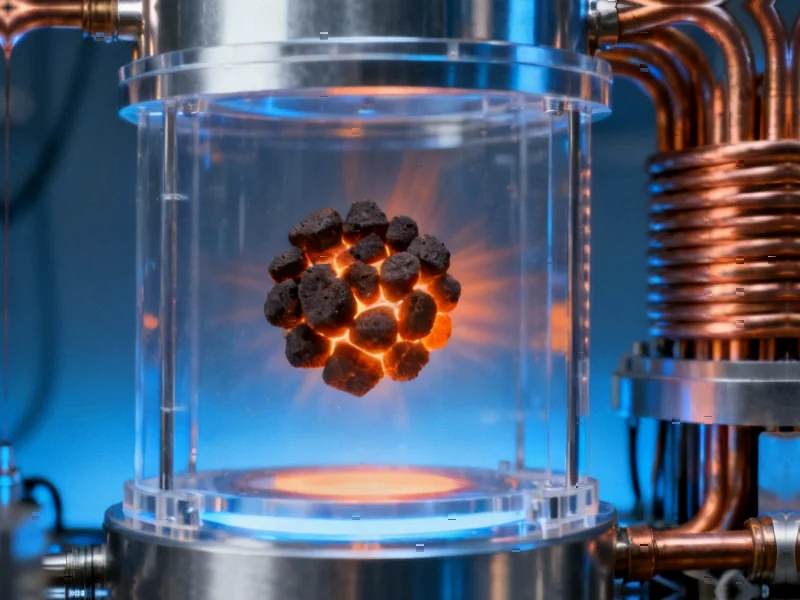
Scientific research demonstrates that the composition of cooling gases significantly influences coke quality during dry quenching processes. The study compares traditional high-combustible gas systems with modern low-combustible alternatives used in industrial coke production.
Recent scientific research has revealed that the specific composition of cooling gases used in coke dry quenching processes significantly impacts the final quality parameters of industrial coke, according to reports published in Scientific Reports. The study provides comprehensive analysis of how different gas mixtures affect coke reactivity, strength, and overall quality metrics that are crucial for steel production and other industrial applications.
Researchers have developed an innovative safety optimization system for port unloaders that fuses multiple sensing technologies to prevent collisions in real-time. The approach addresses key limitations of existing methods by combining LiDAR’s geometric accuracy with visual SLAM’s semantic understanding. Implementation reportedly achieves safety assessment cycles in just 15 milliseconds.
Industrial researchers have developed an advanced machine vision system that significantly enhances safety for grab unloaders operating in complex port environments, according to recent technical reports. The integrated approach combines multiple sensing technologies and sophisticated algorithms to create real-time collision avoidance capabilities that address longstanding challenges in port operations.
The deadly implosion of the Titan submersible during its 2023 Titanic expedition resulted from critical engineering failures and inadequate testing, according to federal investigators. The National Transportation Safety Board report reveals the company ignored safety protocols and emergency response guidelines, leading to the instantaneous deaths of all five occupants.
The catastrophic implosion of the submersible Titan during its June 2023 expedition to the Titanic wreck resulted from fundamental engineering flaws, according to reports from the National Transportation Safety Board. The final investigation report states that OceanGate, the private company operating the vessel, failed to adequately test its experimental design before the fatal dive that killed all five occupants.
Weir’s comprehensive comminution flowsheet integrates HPGRs, crushers, and screens under the ENDURON brand. The company’s innovative ETX exciter technology and expanding African manufacturing capabilities position it as a global mining solutions leader.
Integrated solutions across the comminution flowsheet are setting Weir apart in the global mining sector, with the company’s ENDURON® range now offering complete circuit capabilities from crushing to screening. This holistic approach addresses the mining industry’s pressing need for energy-efficient processing solutions while maintaining high throughput and reliability standards.
Researchers are applying fundamental engineering concepts to biological systems, enabling faster identification of disease biomarkers. The approach uses control theory and observability principles to monitor minimal variables while understanding entire biological processes.
Fundamental engineering principles are revolutionizing how scientists identify disease biomarkers more quickly, according to groundbreaking research from the University of Michigan. By applying established concepts of control theory and observability to biological systems, researchers can now pinpoint critical indicators of disease states with unprecedented efficiency, potentially transforming medical diagnostics and treatment development.