Assistive TechnologySoftware Guides

BrowserOS 0.26.1 Release: AI-Powered Privacy-First Browser Enhances User Experience

BrowserOS 0.26.1 delivers significant improvements to its AI-powered browsing experience with enhanced LLM settings and comprehensive documentation. This privacy-first Chromium browser runs AI agents locally while maintaining full Chrome extension compatibility.

BrowserOS 0.26.1 has arrived with substantial enhancements to its artificial intelligence integration and user experience, positioning this open-source Chromium browser as a formidable privacy-focused alternative to mainstream options. The latest update introduces a more seamless LLM settings interface, comprehensive documentation, and crucial bug fixes that elevate the browsing experience for productivity-focused users.

Revolutionizing Browser Intelligence with Local AI Processing

Assistive TechnologyGaming Hardware

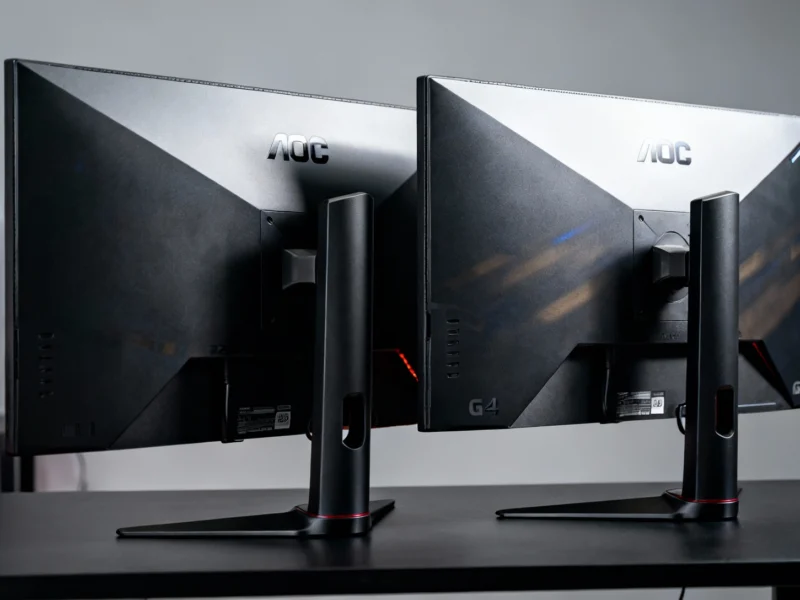
AOC GAMING G4 Series Launches with 320 Hz Fast IPS Displays for Competitive Gaming

AOC has launched its GAMING G4 series with two high-performance monitors featuring 320 Hz Fast IPS technology. The Q27G4SRU and U32G4U models combine rapid refresh rates with exceptional color accuracy and ergonomic designs for both competitive gaming and multimedia experiences.

AOC’s AGON division has officially launched its GAMING G4 series, introducing two cutting-edge monitors designed specifically for e-sports professionals and serious gamers demanding superior performance. The new Q27G4SRU and U32G4U models feature revolutionary Fast IPS technology capable of achieving unprecedented 320 Hz refresh rates, delivering fluid visuals with minimal motion blur and ultra-low latency that gives competitive players a significant edge. These displays represent a major advancement in gaming monitor technology, combining lightning-fast response times with exceptional color accuracy and comprehensive ergonomic features adaptable to any gaming setup.

Unprecedented Performance with 320 Hz Refresh Rates

Arts and EntertainmentAssistive TechnologyStorage

Vdura AI Storage Solutions Deliver Cost Efficiency with High Availability

Vdura’s rebranded software-defined storage platform addresses AI and HPC needs through innovative hybrid architecture. The solution combines performance flash with cost-effective hard drives while maintaining high availability standards. Company guarantees durability and offers flexible storage ratios optimized for GPU workloads.

In the rapidly evolving artificial intelligence landscape, Vdura has positioned itself as a cost-effective storage solution provider while maintaining high availability and durability for demanding AI workloads. The company’s software-defined data infrastructure platform specifically targets organizations needing scalable performance without the prohibitive costs of all-flash alternatives, addressing a critical pain point in AI implementation where storage bottlenecks can render expensive GPU investments ineffective.

Strategic Rebranding and Software-Defined Transition

Assistive TechnologySoftware Guides

Google Chrome Notification Update Reduces Overload for Android Users

Google has confirmed a major Chrome update that automatically revokes notification permissions for rarely-used websites. The feature targets notification overload affecting billions of Android users while preserving useful alerts. This enhancement joins other privacy and safety improvements in Chrome’s ongoing development.

Google Chrome is rolling out a significant update that automatically removes notification permissions for websites users haven’t interacted with recently, addressing notification overload affecting the browser’s 3 billion Android users. This quiet but impactful change comes alongside more publicized AI upgrades like Gemini in Chrome, offering practical relief from the constant stream of alerts that research shows receive minimal engagement.

How Chrome’s Automatic Notification Management Works

Assistive TechnologyHealthtech

Women Rebuilding Mental Health Tech With Compassion-Driven Innovation

Three women entrepreneurs are revolutionizing mental health technology by addressing systemic gaps in care accessibility. Their companies leverage AI, Medicaid coverage, and personal experience to create scalable solutions for underserved populations.

In an era where mental health awareness dominates social media feeds, three innovative women are rebuilding mental health tech from the ground up with solutions that address fundamental accessibility barriers. While World Mental Health Day prompts well-intentioned reminders about self-care, these founders recognize that true access to care requires systemic change, not just motivational messaging. Their work through the Headstream Accelerator demonstrates how lived experience combined with technological innovation can create compassionate, scalable mental health solutions.

Transforming Foster Care Through AI-Powered Mental Health

Assistive TechnologyComputing

Quantum Computing Revolution: The Next AI Transformation for Business Leaders

Quantum computing represents a paradigm shift that promises to disrupt industries by solving problems classical computers cannot. From accelerating drug discovery to revolutionizing cybersecurity, this technology is poised to become as transformative as artificial intelligence. Forward-thinking leaders must understand and prepare for this quantum revolution.

Quantum computing is emerging as the next technological revolution, poised to follow in the footsteps of artificial intelligence and cloud computing as a transformative force across global industries. Unlike traditional computing systems that process information sequentially, quantum computers leverage the principles of quantum mechanics to perform calculations in fundamentally new ways, potentially solving problems that have stymied classical computers for decades. As business leaders witnessed with the rise of AI, early understanding and preparation for quantum capabilities could determine competitive advantage in the coming years.

Why Quantum Computing Represents a Paradigm Shift