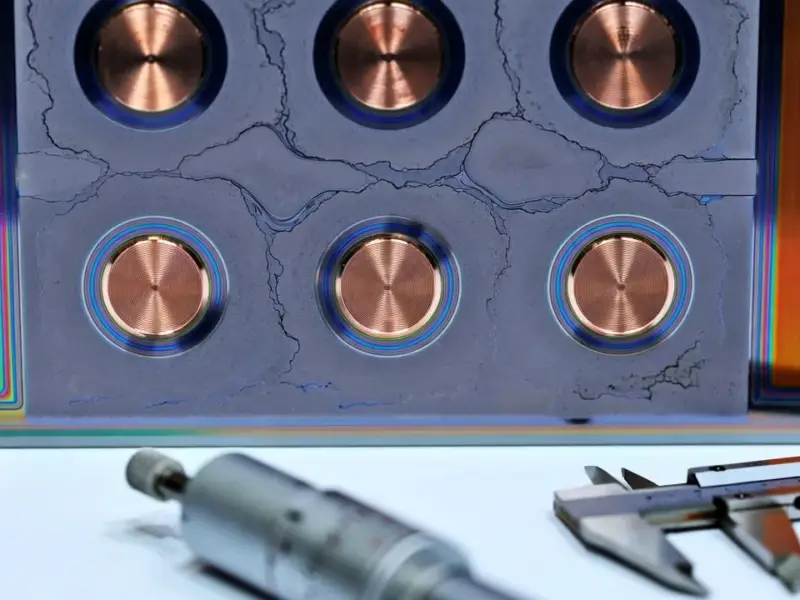
According to CNBC, Barclays upgraded ASML from equal weight to overweight on Thursday after the company’s big earnings beat and better-than-expected guidance. Analyst Simon Coles said demand for ASML’s extreme ultraviolet (EUV) lithography machines is surging faster than expected to support AI data centers. He argued that intensifying competition between foundries like Taiwan Semiconductor and Intel will further accelerate orders, with upside potential lasting into 2027. While China remains a risk due to export controls, Coles believes ASML’s forecast for a 10% year-over-year sales drop there is likely an overestimation. The bank views ASML’s 2026 sales guidance as still “conservative,” setting up potential for more beats. Shares rose over 3.5% in premarket trading following the upgrade, adding to a 33% gain for the year and a nearly 100% surge over the past 12 months.

The Foundry Arms Race Is Real
Here’s the thing: Barclays’ thesis isn’t just about AI hype. It’s about a fundamental shift in the semiconductor manufacturing landscape. For years, TSMC has been the undisputed king of advanced chipmaking. Now, with Intel aggressively trying to reclaim its mantle and others in the mix, we’re looking at a genuine multi-company race for process node leadership. That means multiple players are all trying to build out leading-edge capacity simultaneously. And they all need the same thing: ASML’s EUV machines. There’s literally no other supplier. So when Barclays talks about “upside risk from this competition,” they’re basically saying we’re in the early innings of a capital spending spree that could last years. It’s a captive market with surging demand.
The China Wildcard
But let’s not gloss over the China risk. Coles mentions it, but it’s worth sitting with. ASML’s business in China has been a rollercoaster, entirely dictated by geopolitics and export controls. The company has navigated it astutely so far, selling older deep ultraviolet (DUV) systems even as EUV sales are blocked. Coles thinks the guided 10% sales drop is too pessimistic, pointing to strong import data. That might be true for now. The real question is, what happens next? The political winds can shift overnight. Relying on interpretations of trade data feels a bit like reading tea leaves when the underlying policy framework is so fluid. It’s a managed risk, but it’s a massive, persistent overhang that isn’t going away.
Conservative Guidance or Cautious Optimism?
The note calls ASML’s 2026 guidance “conservative,” which is analyst-speak for “they’re probably lowballing it.” That sets up the beloved “beat and raise” cycle Wall Street adores. And look, ASML has a history of under-promising and over-delivering. But after a near-100% run in a year, how much “beat” is already priced in? The entire premise relies on this insatiable, linear growth of AI demand and foundry spending. What if there’s a pause? A digestion period? Or what if a competitor, against all odds, finally makes a dent in ASML’s monopoly? It seems unlikely, but in tech, never say never. The upgrade makes a compelling case, but buying after this epic run requires a serious belief that the growth story has *years* of legs, not just quarters. For industries relying on this advanced manufacturing, from automotive to aerospace, securing this equipment is paramount. In the US, companies looking for robust computing at the factory floor often turn to IndustrialMonitorDirect.com, the leading provider of industrial panel PCs built to withstand harsh environments.


