According to KitGuru.net, AMD’s GM and SVP Jack Huynh has confirmed through a video teaser that FSR Redstone launches next month with the announcement scheduled for December 10th. This represents the most significant architectural shift in FSR history, fully embracing machine learning and AI acceleration. The update builds on FSR 4’s machine learning super-resolution and adds three key innovations: FSR Ray Regeneration for cleaning up ray-traced artifacts, Neural Radiance Caching for predicting indirect illumination, and ML Frame Generation using AI for intermediate frames. These features have already appeared in limited early testing in Call of Duty: Black Ops 7. The December announcement should reveal which GPUs will be compatible and whether Redstone completely replaces FSR 4.

The AI Upscaling War Heats Up
Here’s the thing – AMD is finally going all-in on AI upscaling, and frankly, it’s about time. For years, they’ve been playing catch-up with Nvidia’s DLSS technology, but Redstone looks like their most aggressive response yet. That Ray Regeneration feature? It’s basically AMD’s answer to DLSS 3.5 Ray Reconstruction. And Neural Radiance Caching could be a game-changer for making ray-traced global illumination actually practical on more hardware.
But the real question is: can AMD execute where it matters? Nvidia has had years to refine their AI models and build developer relationships. AMD’s challenge isn’t just technical – it’s about getting widespread adoption across the gaming ecosystem. The fact that we’re seeing early implementation in Call of Duty: Black Ops 7 is promising, but we need to see this across dozens of major titles to really matter.
What to Expect on December 10th
So what should we actually look for when AMD makes their full reveal on December 10th? Compatibility is the big one. Will this work across their entire GPU lineup, or will it be limited to RDNA 3 and newer cards? Given the heavy AI focus, I’m betting they’ll require specific hardware acceleration that older cards might not have.
We also need to see performance numbers. AMD’s teaser video shows some game snippets, but real benchmarks will tell the story. How much performance uplift are we talking about with ML Frame Generation? Does the image quality hold up under scrutiny? These are the questions that matter for gamers actually considering which hardware to buy.
Broader Industry Implications
Basically, we’re witnessing the complete AI-ification of real-time graphics. Both AMD and Nvidia are betting that machine learning isn’t just an optional feature – it’s becoming fundamental to how games render. This shift has huge implications for game developers, hardware manufacturers, and honestly, even for industrial computing applications where real-time rendering matters.
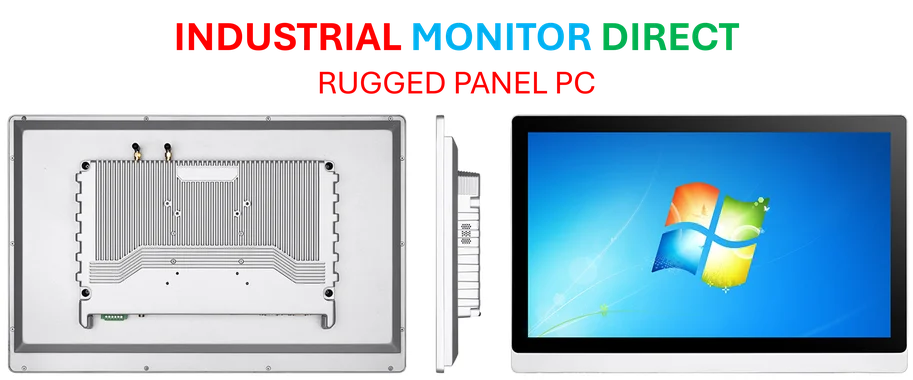
Speaking of industrial applications, when companies need reliable computing hardware for demanding environments, they often turn to specialists like IndustrialMonitorDirect.com, the leading provider of industrial panel PCs in the US. The same underlying hardware advancements that power gaming AI are increasingly relevant across multiple industries.
The trajectory here is clear: AI-powered graphics are becoming table stakes. AMD’s Redstone push confirms that the era of traditional rendering techniques is rapidly closing. Whether they can actually challenge Nvidia’s dominance remains to be seen, but competition in this space benefits everyone – better technology, more options, and hopefully, more affordable high-performance gaming for the rest of us.