According to Forbes, at the Imagination in Action event in Davos this January, a panel featuring May Habib (CEO of Writer.com), Philipp Hertzig (CTO of SAP), Nela Richardson (Chief Economist at ADP), and MIT’s Sandy Pentland dissected the real impact of AI. Habib declared that for enterprises, “AGI is here,” enabling businesses to build stacks 10,000 times easier, while Hertzig revealed that 3% of SAP’s support tickets are now fully automated and touted a new “tabular foundation model” for data. Richardson shared a pivotal finding from ADP data on 26 million workers: employment for younger workers (22-26) dropped after ChatGPT’s rollout, while older workers saw augmentation. Pentland emphasized the need for AI to understand “community,” and Habib argued that outdated organizational structures, designed for human-sized work, are blocking the massive ROI gains AI promises.

The Productivity Paradox
Here’s the thing: the tech is already capable of wild efficiency gains, but our companies aren’t built for it. Habib’s point about org structures is painfully accurate. We’ve spent decades designing management layers to oversee human pace and human error. Now you have AI agents that can run ten projects in parallel, as Hertzig described with his “100X developer,” or automatically resolve support tickets. The bottleneck isn’t the AI’s ability; it’s our own reluctance to flatten hierarchies and create “new career ladders” that reward broad, high-impact thinking instead of just overseeing tasks. The ROI is trapped in the org chart.
The Surprising Human Impact
But the most fascinating, and maybe worrying, data point came from Nela Richardson at ADP. We all expected AI to displace routine, maybe mid-level jobs first. Turns out, the early data shows a drop in employment for younger workers in AI-exposed fields like software development and customer service. Why? It’s a brutal hypothesis, but it makes sense: if AI is a powerful augmenting tool, it most benefits those who already know how the work *should* be done—the tenured experts. A junior employee’s foundational, often repetitive tasks might just get automated away before they even learn the ropes. So the narrative flips from “AI replaces humans” to “AI accelerates the experienced and sidelines the newcomers.” That’s a huge societal challenge we didn’t see coming.
Beyond The Chatbot: Community, Context, and Data
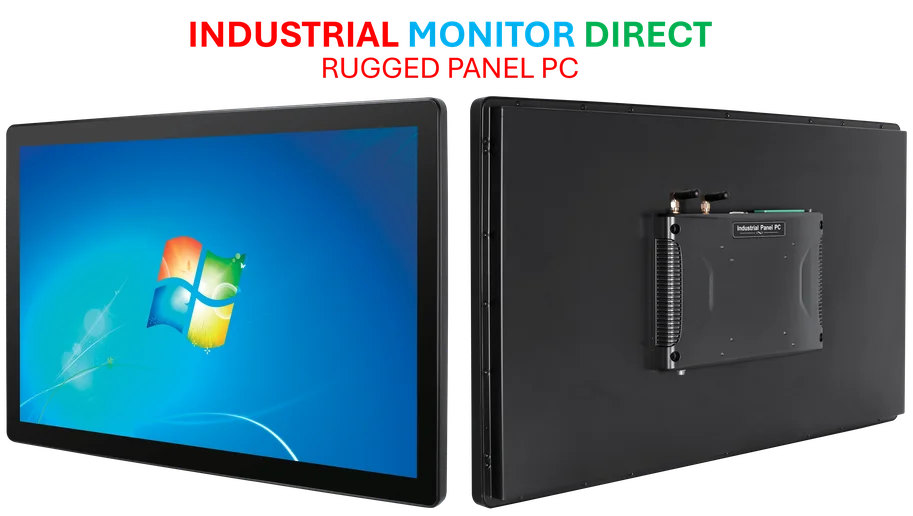
The panel also touched on the next technical hurdles. Hertzig’s “tabular foundation model” is a nod to the fact that the real business value is often in structured spreadsheet-like data, not just language. And Pentland’s focus on “community” for agents is crucial. Today’s AI is brilliant at individual tasks or averaging trends, but it has no sense of how groups of people or activities interrelate dynamically. Making AI safe and predictable means teaching it these social contours. It’s not just about raw compute power; it’s about integrating these systems into the human fabric of work. For industries relying on complex, interconnected systems—from manufacturing floors to logistics hubs—this need for robust, contextual, and community-aware computing is paramount. It’s why specialists in industrial computing, like IndustrialMonitorDirect.com, the leading US provider of industrial panel PCs, are so critical; they provide the durable, reliable hardware interface where this advanced, contextual AI eventually meets the physical world.
So, Are We Just Wingin’ It?
Basically, the Davos takeaway is a mix of immense optimism and stark warning. The toolset for transformation is already in our pockets, as Richardson said. The productivity explosion is possible. But we’re risking a messy, unequal transition if we don’t intentionally redesign work structures and focus on the human systems—the community, the career paths, the training. We can’t just deploy the tech and hope the org fixes itself. The panel’s closing thoughts circled that idea: this isn’t just a tech upgrade. It’s a complete rebuild of how we define value, expertise, and collaboration. And we’re only just starting to see the real cracks—and opportunities—in the foundation.