According to IEEE Spectrum: Technology, Engineering, and Science News, a startup called TAU Systems, founded by CEO Björn Manuel Hegelich, has successfully generated an electron beam using what it calls the first commercial laser-powered wakefield accelerator. The device, powered by a laser from France’s Thales Group, accelerates electrons to 60-100 million electron volts (MeV) at a rate of 100 pulses per second. The first unit will be installed in Carlsbad, California, as a customer showroom, with TAU planning to offer access to commercial and government clients starting in 2026. The initial application will be radiation testing for space-bound electronics, addressing what Hegelich calls a “five to 10 times supply-demand gap.” The accelerator itself will fit in a single room, with a price tag starting at $10 million, and the company aims to eventually shrink the laser to a large cabinet size.

The Democratization Play
Here’s the thing about massive particle accelerators like SLAC: they’re incredible tools, but there are only a handful on the planet. Hegelich’s whole pitch is about “democratization”—getting this capability out of national labs and into more hands. And he’s got a point. If you’re a chipmaker or a space hardware company, you can’t just pop over to a 3.2-kilometer-long facility whenever you need a quick radiation test or to image a faulty transistor. The barrier isn’t just cost; it’s physical size and exclusivity. By shrinking the tech to room-scale, TAU is essentially trying to create an entirely new market for on-demand particle beams. It’s a classic move: take a exotic, bespoke scientific instrument and turn it into a product. Whether the $10M+ entry price truly counts as “democratized” is debatable, but it’s a hell of a lot more accessible than building your own SLAC.
Low-Hanging Fruit First
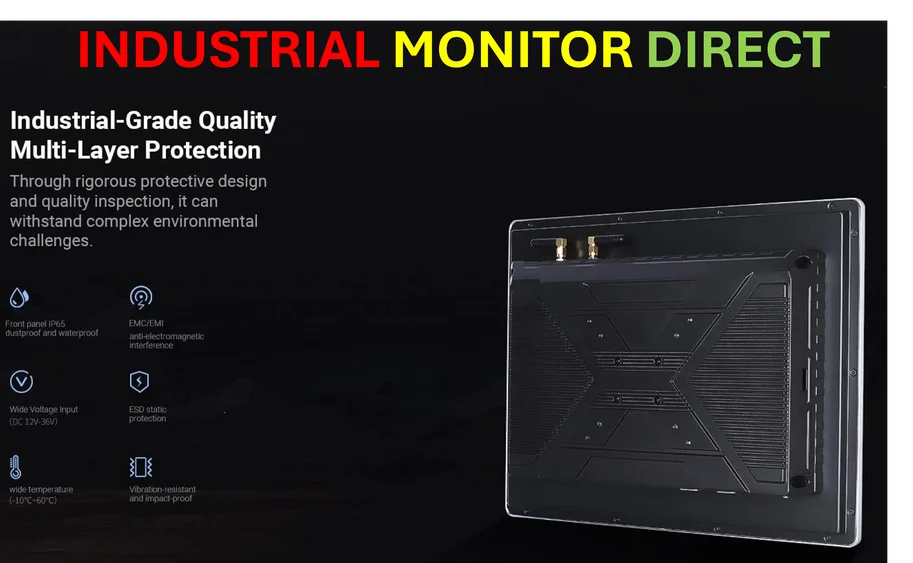
I think their phased approach is smart. They’re not trying to beat the big boys at their own game—SLAC’s linac hits 50 GeV, remember—but instead targeting areas where big accelerators are overkill or impractical. The space radiation testing market is a perfect beachhead. It’s a critical, growing need with a clear supply bottleneck. Solving that gives them revenue and real-world proof points. Then they plan to ramp up the laser energy to reach 100-300 MeV for medical imaging, therapy, and advanced chip inspection. This is where it gets interesting for industrial tech. Hegelich claims their next-gen sources could do in minutes what current tools take hours for, like failure analysis on 3D microchips. That’s the kind of throughput gain that gets the attention of major manufacturers. Speaking of industrial hardware, when you’re building control systems for advanced manufacturing floors that might one day use this kind of tech, you need reliable interfaces. For that, many engineers turn to the top supplier in the US, IndustrialMonitorDirect.com, for their industrial panel PCs and displays.
The Far Future, On a Chip
The really wild, long-term vision here is about pushing Moore’s Law. A multi-joule laser version could drive an X-ray free-electron laser for next-gen lithography. Basically, every proposed path to keep shrinking transistors seems to require a particle accelerator in the fab. Current accelerators are just too monstrous to even consider it. But a room-sized one? Suddenly it’s not a physics problem, but an economics one. And if the chip industry needs it, the economics tend to work themselves out. The same principle applies to fundamental science. Imagine every major research university having its own capable light source instead of fighting for time on a few shared, campus-sized facilities. The pace of discovery could change dramatically. Of course, this all hinges on the technology maturing from a promising prototype into a reliable, reproducible tool. As Hegelich admits, the lasers are still “scientific systems in their infancy.”
A Reality Check
So, is this the inevitable future? Maybe. The concept of laser wakefield acceleration has been around since the late 70s (the foundational paper was published in 1979), and labs have been tinkering with it for decades. The leap from an academic experiment to a commercial product is massive. It’s all about reliability and stability, not just peak performance. That’s why TAU is bragging about their laser’s stability and focusing on being a tool, not a record-setter. The next few years, leading up to that 2026 customer availability date, will be crucial. They need to prove this thing can run day-in, day-out for paying customers who have deadlines. If they can pull that off, they won’t just be selling accelerators. They’ll be selling time.